What Trump Can Move
Oil still listens to the supply language instantly. Equities mostly listen to deadline extensions. Volume listens to nobody, because nobody trusts the headline path enough to commit size.
The hierarchy was clear across Monday April 6 and Tuesday April 7, 2026: US equities kept buying time, not resolution. SPY closed +0.47% on Monday and added only +0.04% Tuesday, while USO rose +0.74% Monday and then slipped -0.62% Tuesday as the market whipsawed between Trump’s threats and his claims that talks were still going well.
The important distinction is not “risk-on” versus “risk-off.” It is which asset has to price physical disruption immediately. Oil does. Stocks often do not. Treasuries and gold only partly do, because they are balancing inflation, growth, and safety at the same time. The volume collapse says traders have learned that rhetoric alone is no longer enough.
1. What Monday and Tuesday actually did
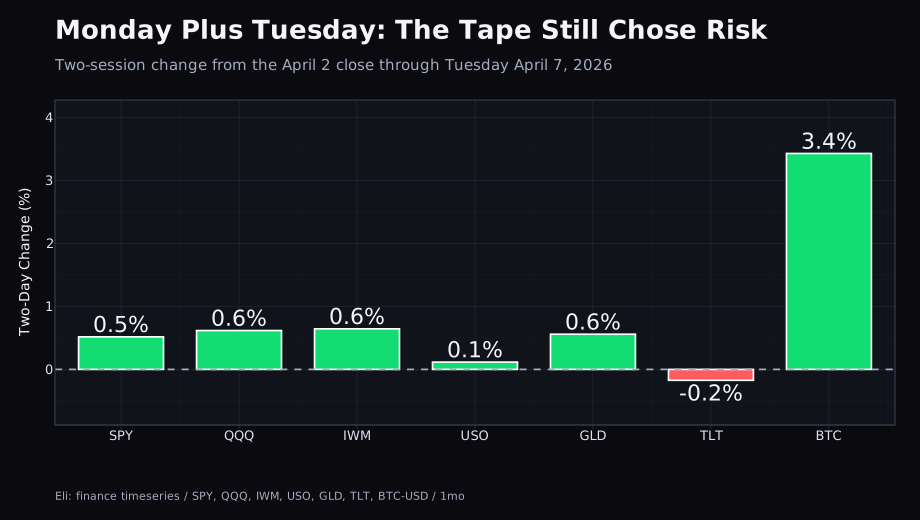
Monday looked like the market pricing another extension, not a clean break in either direction. Tuesday looked like the market testing the threat and then refusing to extrapolate it all the way through the equity tape. Over the full two-session window, the winners were still the usual large-cap risk proxies and crypto. The loser was duration. Oil, importantly, finished only slightly up over the two sessions even though it was the asset most sensitive to every new threat headline.
Read the board carefully
This chart is why “the market was calm” is the wrong summary. The tape was not calm. It was selective. SPY, QQQ, and IWM all rose across the two sessions. BTC rose much more. GLD recovered. TLT still finished down. USO barely netted out positive only because Tuesday faded what Monday had already added.
2. Trump can move oil faster than he can move stocks
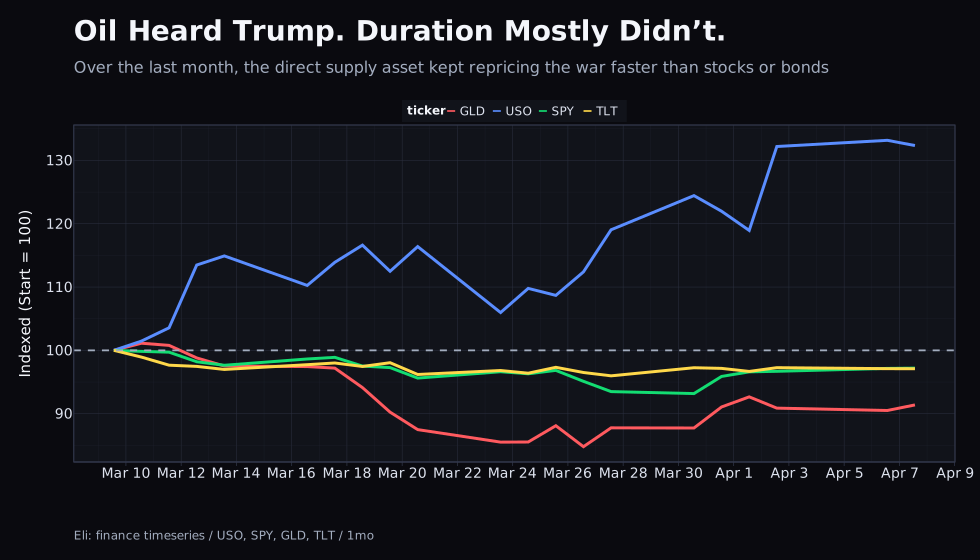
AP’s March 25 recap and Bloomberg’s Monday wrap describe the same mechanism in opposite directions. When talk of a pause or “productive conversations” improves the odds of freer flows through Hormuz, oil falls fast. When Trump threatens bridges, power plants, or the wider energy system, oil rises because those statements map directly onto physical supply and transit risk. Stocks do not react in the same clean way because repeated deadline delays have taught traders to discount the rhetoric unless and until it changes earnings, funding, or actual physical flow.
What responds
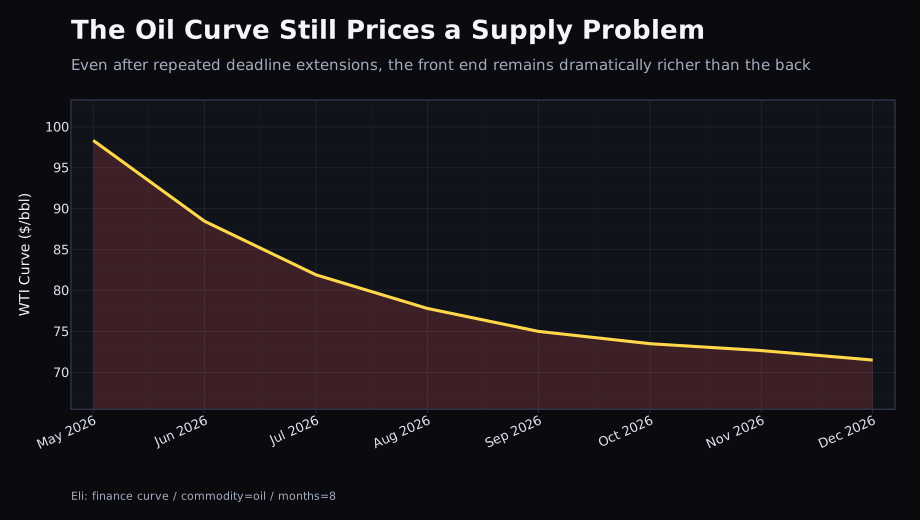
Oil responds first because Trump’s language targets the exact bottlenecks that set oil prices: Hormuz transit, oil infrastructure, and the probability of more strikes. Bloomberg’s Monday wrap showed crude climbing even while he said talks were “going well,” because the threat path stayed alive. AP’s March 25 story showed the reverse: hopes for a pause pushed oil lower.
Crypto also responds more freely than cash equities because it trades around the clock and is less constrained by the calendar and by traditional risk desks.
What doesn’t respond cleanly
SPY and QQQ mostly hear the extension path now. Multiple delayed deadlines have made rhetoric less powerful on index cash unless it changes the near-term earnings or growth picture.
TLT does not give a pure risk-off signal because the rate market is balancing two opposing ideas: war risk should support duration, but oil and issuance should pressure yields higher. That is why the bond tape has looked hesitant instead of decisive.
3. Why volume has been so low recently
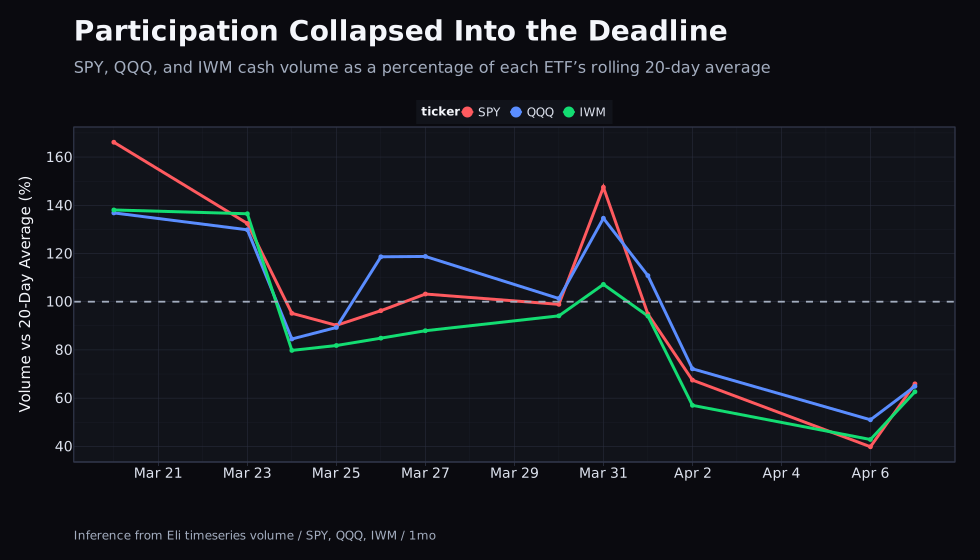
This part is our inference from Eli volume data, not a direct quote from any one article. The pattern is simple: the market has been trained by repeated reversals to wait for physical confirmation. Monday’s volume was extraordinarily light relative to recent norms, and Tuesday only partly recovered. If you think the headline can be reversed in the next post, you do not put on full-size cash-equity risk. You wait.
The volume read
SPY did only 39.8% of its rolling 20-day average volume on Monday. QQQ did 51.0%. IWM did 42.8%. Tuesday improved, but only to 65.9%, 64.9%, and 62.6% respectively. That is not conviction. It is participation on a leash.
4. The after-close twist
After the cash close, Trump accepted a Pakistan-backed two-week ceasefire framework, according to AP and Axios. That does not retroactively change what Monday and Tuesday did. It does sharpen the interpretation. The market spent two sessions refusing to fully believe the threat path. That skepticism was not irrational. It was exactly what the post-close news ended up rewarding.
Extension priced
The market believed there was still time, even if the language stayed hot.
Threat priced selectively
Oil and gold listened more than SPY, QQQ, or TLT.
Skepticism paid
The two-week ceasefire frame explains why cash volume stayed thin and index risk stayed surprisingly sticky.
| Question | Answer from this report | Why it matters |
|---|---|---|
| What did the market do Monday? | Bought another extension. | Equities and oil both rose, while gold and Treasuries did not confirm a panic tape. |
| What did it do Tuesday? | Priced the threat without fully believing it. | Stocks closed nearly flat, oil gave back some of Monday, gold bounced, and volume stayed weak. |
| What responds to Trump fastest? | Oil. | His rhetoric changes the probability of actual disruption to transit and energy infrastructure. |
| What doesn’t? | Broad equity cash and, so far, duration. | Repeated deadline resets have made words alone less trusted in those markets. |