The War Arc — 3 Months Normalized
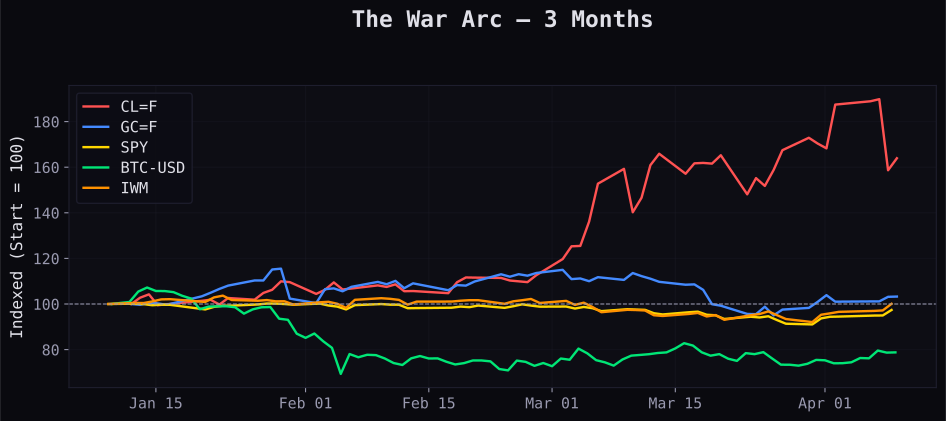
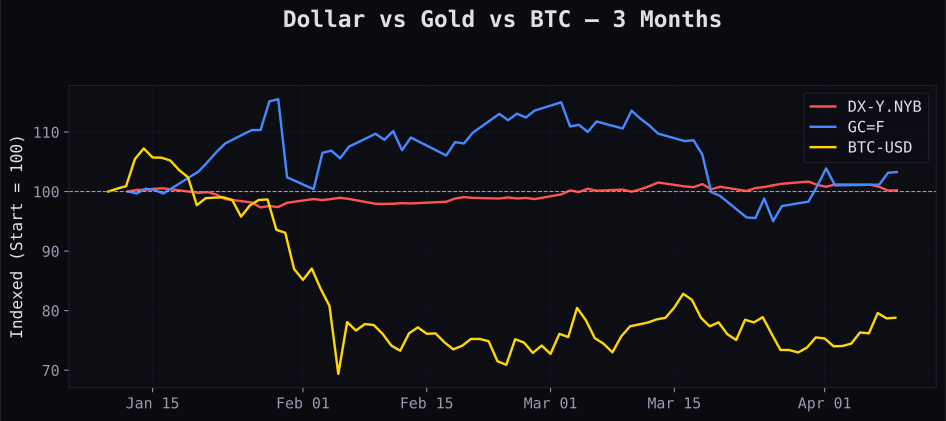
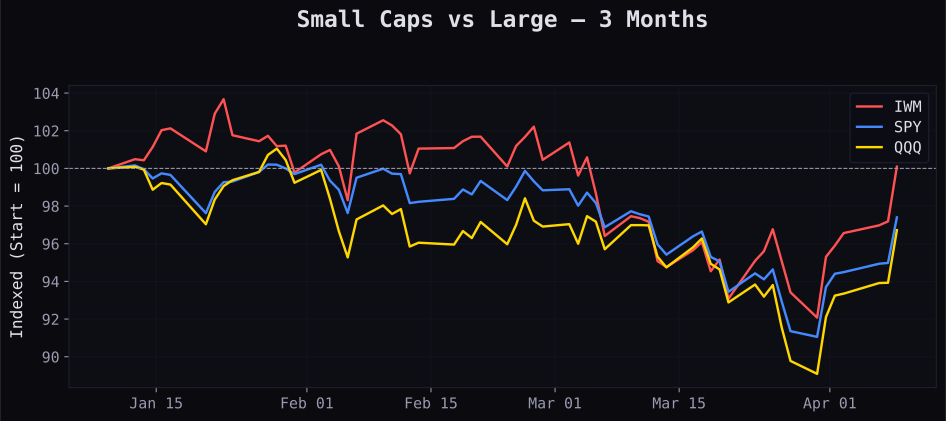
Oil +64%. Gold +6%. SPY −3%. BTC −22%. Small caps flat. The war created two markets.
The ceasefire stopped one-sixth of the fighting. Oil needed 24 hours to figure that out.
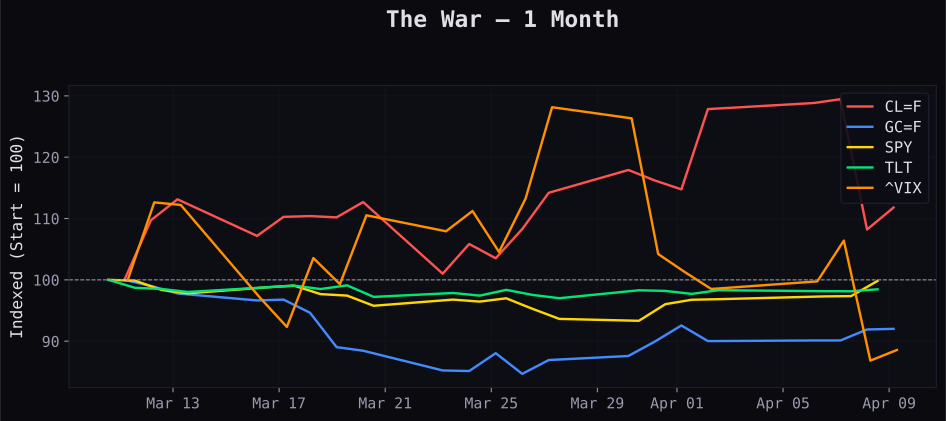
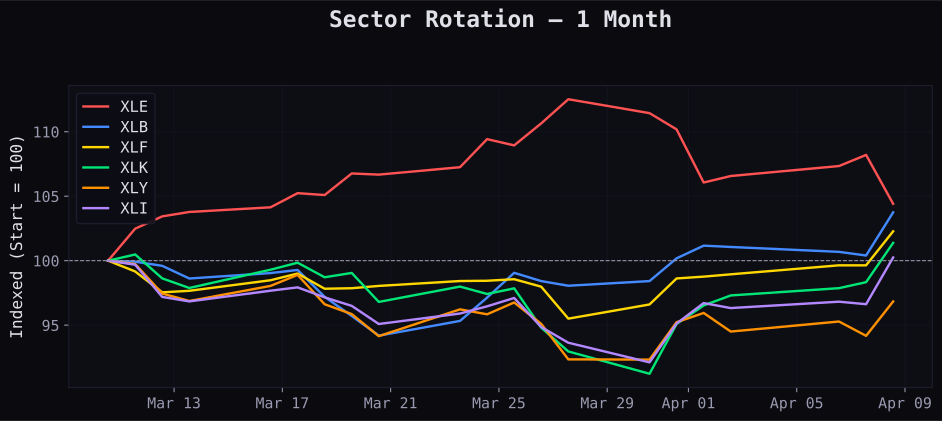
The ceasefire’s shelf life was 24 hours. Oil hit $91.05 at the Tuesday low — a 22% crash from Monday’s $117 high — and by Wednesday evening had clawed back to $94. Overnight it broke $97, then $98, then $99. At 7 AM Thursday, WTI sits at $99.18, less than a dollar from reclaiming triple digits. That is a 31% retracement of the crash in the first 12 hours, 50% by hour 24. The ceasefire didn’t change the physical supply picture — Hormuz is still effectively closed, three ships per day versus 135 normal, 800 vessels trapped — and the market is repricing accordingly.
The ceasefire announced Monday covers bilateral US-Iran combat. That accounts for roughly one-sixth of the war. Arab News tallied the rest: 83% of Iran’s projectiles during this conflict struck Gulf states — Kuwait, Bahrain, Saudi Arabia, the UAE, Iraq. On ceasefire day alone, Israel launched 100 airstrikes on Lebanon in the span of ten minutes, killing 254 people and wounding over a thousand. Netanyahu stated publicly that Lebanon is not covered. Iran cited the strikes as a violation. IRGC commanders said their hands remain on the trigger. Oil at $99 is pricing a comprehensive peace. What exists is a bilateral pause while the rest of the region burns.
Saudi Arabia’s East-West Pipeline — the only way to export oil without passing through Hormuz — was struck by Iranian drones on ceasefire day. The damage was limited. But Iran proved it can reach the one piece of infrastructure the entire bypass strategy depends on.
Iran faces a trilemma. Accept Hezbollah’s destruction under Israeli bombardment. Re-close Hormuz entirely. Or escalate to full regional war. Oil at $99 only prices the first option. Friday’s Islamabad talks — Vance versus Ghalibaf, maximalist positions on both sides, 37% odds the meeting even happens — determine which path Iran chooses.
Three months ago, the Cleveland Fed’s core PCE nowcast read 2.18%. Today it reads 3.63%. That is not a blip — it is a regime change in the inflation trajectory, and it happened before this morning’s official PCE print. The FOMC minutes released yesterday confirm the Fed sees it too: seven of nineteen members now project zero rate cuts in 2026, up from six in December. Some participants argued the post-meeting statement should explicitly acknowledge rate hikes as a possibility. Waller, who dissented in January pushing for cuts, flipped to hold. The lone remaining dove — Governor Miran — voted for a 25-basis-point cut and lost 11-to-1. The market repriced from 14% to 43% cut probability on ceasefire euphoria. That repricing is built on sand.
The problem is three feedback loops running simultaneously. Tariffs are hitting core goods — the Fed’s own staff “largely attributed” the pickup to trade policy, and the pace of increase “remained well above” what is consistent with the 2% target. Energy costs from the Hormuz disruption are passing through to transportation, agriculture, and chemicals, which feed into services inflation with a lag. And shelter — still the largest CPI component at 36% — refuses to decelerate because mortgage rates track the long end of the Treasury curve, which is pinned near 5% by $12 trillion in annual gross issuance. Each loop reinforces the others.
Beneath the headlines about ceasefires and inflation sits a funding market that has quietly lost its shock absorber. The Federal Reserve’s overnight reverse repo facility — the parking lot where excess cash used to sit — held $0.18 billion on Tuesday with four counterparties. At its peak it held $2.5 trillion. That buffer is gone, which means any further liquidity drain hits bank reserves directly. Primary dealers are holding $557 billion in Treasury inventory, the highest level this cycle, while the government issues roughly $12 trillion in gross debt annually. Yesterday’s 10-year auction saw indirect bidders — the proxy for foreign central banks and institutional buyers — drop to 55% from 74% a month earlier, the largest single-month decline in the data.
Today’s 30-year auction at 1 PM is the real stress test: the yield sits at 4.90%, ten basis points from the psychological 5% line. Credit markets have not priced any of this. The gap between equity volatility stress and credit calm is 1.79 standard deviations — the widest of this cycle. High-yield spreads sit where they were before the war started. The same insurance balance sheets holding a trillion dollars in private credit are simultaneously backstopping $40 billion in Hormuz shipping risk while regulators force re-ratings. History favors credit being late: it was late in 2007, late in 2020, and late in 2022.
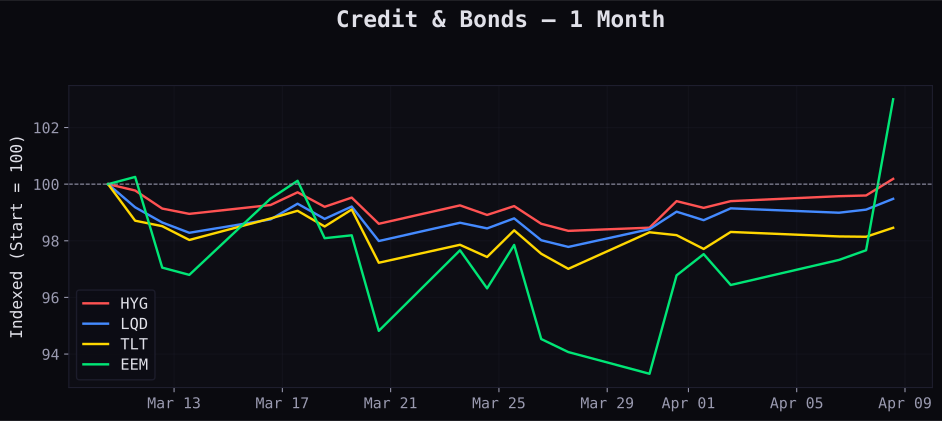
Bonds are telling a different story than oil. TLT is green this morning. Ten-year breakevens are falling to 2.33% despite $99 oil. The bond market is pricing the energy shock as a growth headwind, not an inflation accelerant. Oil says: supply disruption, inflation, Fed trapped. Bonds say: demand destruction, recession, eventual rate cuts. The 2-year yield at 3.81% has not breached its March trigger level of 3.96%. If PCE prints hot and the 2-year still doesn’t move, the bond market is looking through the inflation and seeing the growth collapse on the other side. That would be a different framework entirely — recession without stagflation.
Net recession probability: 45%. The political economy makes tariff relief unlikely — OBBBA’s $5.2 trillion revenue hole requires tariff income. The ceasefire was designed to fail constructively. The insurance sector is where the war thesis meets private credit meets the bond market. They aren’t three risks — they’re one risk in three disguises.
8:30 AM today — PCE deflator. Core consensus 0.37% MoM, 3.0% YoY. If hot (>0.43%), the ceasefire rate-cut repricing collapses. If cold (<0.30%), the rally gets a second life.
1 PM today — 30-year auction. Yield at 4.90%. If indirects drop below 50%, the fiscal supply bomb thesis is confirmed and 5% yields become reality.
8:30 AM tomorrow — March CPI. The first print capturing tariff passthrough. Consensus 3.3% headline. Polymarket: 94% chance MoM ≥ 0.8%. The 2-year yield reaction in the first five minutes is the single most important data point this week.
Friday afternoon — Islamabad talks. Vance vs. Ghalibaf. 37% odds the meeting happens. If it fails, oil reprices $5-10 higher and the ceasefire narrative is officially dead.
April 13-15 — Bank earnings. GS, JPM, WFC, C, BLK, BAC, MS. Credit loss provisions are the private credit contagion test. Dimon already flagged it in his annual letter three days ago.
Section 122 tariffs expire July 23 and drop, producing instant disinflation. Hormuz fully opens and the EU waives the LNG ban. Tax cuts pass and offset tariff costs for consumers. AI productivity materializes and corporate profits surge. Any three of these happening together makes recession probability drop below 15%. The political economy makes each individually less likely than the financial models suggest.