One year — the tape Berkshire watched from cash
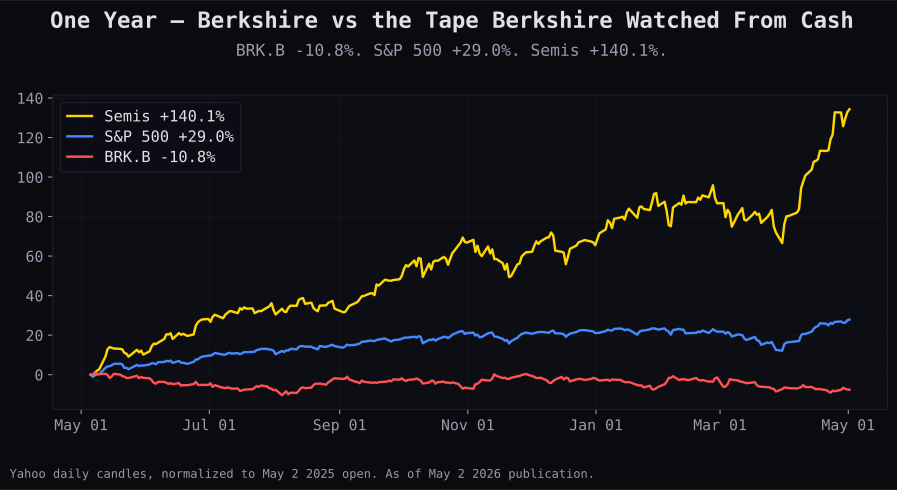
SMH +140.1% / S&P 500 +29.0% / BRK.B −10.8%. The conglomerate is the worst one–year performer in the macro core.
Greg Abel’s first quarter as Berkshire chief executive. The cash pile rose to a record $397 billion. Berkshire sold $24 billion of equities and bought $16 billion. The buybacks were a token. The most defensive stance in company history continued.
SMH +140.1% / S&P 500 +29.0% / BRK.B −10.8%. The conglomerate is the worst one–year performer in the macro core.
$397.4 billion. Berkshire’s cash position climbed to a record $397.4 billion in Greg Abel’s first quarter as chief executive — up $24 billion from the $373.3 billion at the end of 2025 and topping the prior peak $381.6 billion set in the third quarter of 2024. Abel inherited the most defensive stance in company history and deepened it.
$24 billion. $16 billion. The cash buildup came from net selling. Berkshire sold $24.1 billion of equities in the quarter and purchased $16 billion — a net $8 billion exit during a quarter when the S&P 500 returned 4 percent. The first quarter under the new chief executive looks like Buffett’s last several quarters with the patience dial turned higher.
$235 million. Berkshire repurchased $235 million of its own stock during the quarter. The figure includes $226 million purchased on March 4 in a single transaction. The remaining $9 million represented the rest of the entire quarter. Set against the $397 billion cash pile, the buyback ratio was 0.06 percent.
+18 percent. Operating earnings printed $11.35 billion, up nearly 18 percent year over year, missing the $11.56 billion analyst consensus by 1.8 percent. Net income attributable to shareholders was $10.1 billion, more than double the prior–year quarter’s $4.6 billion. The insurance underwriting unit climbed 28.5 percent to about $1.7 billion. The operational engine is running fine.
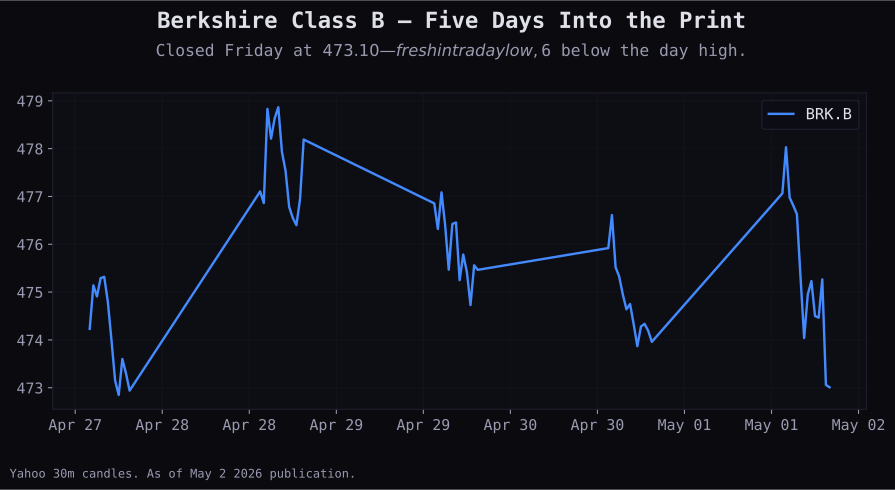
Closed Friday at $473.10 — fresh intraday low, $6.10 below the $479.10 day high. The fade into the print was decisively defensive.
−10.8 percent. Berkshire Class B shares are down 10.8 percent over the past twelve months while the S&P 500 has returned 29 percent. The semiconductor exchange–traded fund returned 140 percent on the same window. The conglomerate is now the worst one–year performer in the major–cap macro core. The dry powder sat in a vault while the rally compounded.
$473.10. Class B shares closed Friday at $473.10 — a fresh intraday low and 1.27 percent below the $479.10 day high. The fade into the print was decisively defensive. Insurance investment income, premiums earned, and the ratio of Treasury bills to operating cash will define how the market reads the quarter into Monday’s open.
$22.4 billion. +28.5 percent. Insurance premiums earned came in at consensus $22.4 billion, essentially flat against the $22.5 billion fourth–quarter run rate. Underwriting earnings rose 28.5 percent year over year to $1.7 billion — the operational segment that benefited from improved pricing, strong policy retention, higher average auto premiums, and a benign catastrophe environment. The float should grow against this print.