Palantir, last six months, daily
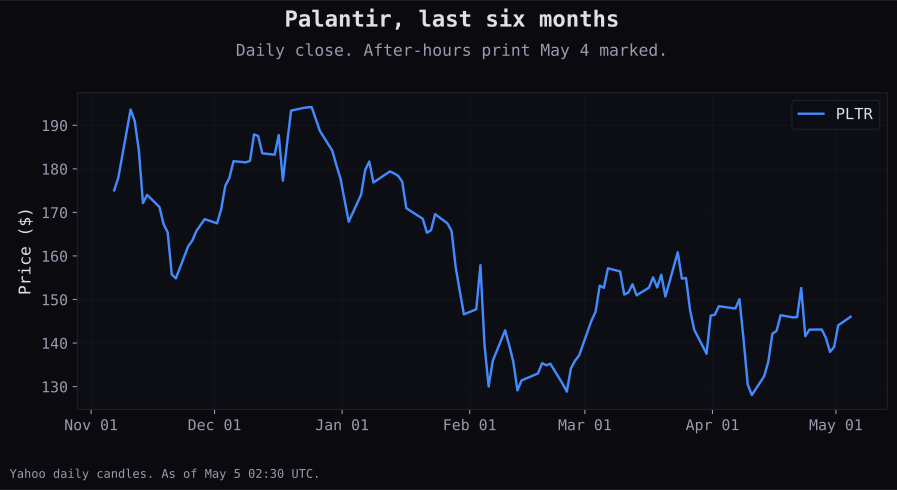
Palantir printed the largest revenue beat in its history. The stock spiked to $150.76 after the bell, sold off to $141.25, and settled around $142, down two and seven tenths from the cash close. The thirty–year Treasury yield crossed five percent. Brent ran above $115 on a drone at the U.A.E.’s Fujairah, then gave most of it back.
Palantir reported Q1 after the bell. EPS came in at $0.33 against a $0.28 consensus, an 18% beat. Revenue printed at $1.633 billion against $1.54 expected, a 6% beat.
Sales grew about 85% year over year, the fastest pace since the 2020 direct listing. Full–year guidance was raised to $7.65 to $7.66 billion, well above the $7.27 billion consensus, with U.S. commercial revenue now guided to grow at least 120%.
The price action did not match. The cash session opened with a 2.6% gap up to $147.84, hit an intraday high of $149.62 on the run–up, and faded to close at $146.03, down 1.2% on the session.
The print released after the bell. The stock spiked on the headlines to a fresh after–hours high of $150.76, then sold off all the way to $141.25, and settled around $142.09 by 8 p.m. ET, down 2.7% from the cash close.
Friday’s close was $144.07. Palantir gave back the entire week and a little more in the round trip after the print.
This was the largest revenue beat in the company’s history. The stock printed both an after–hours high and an after–hours low, and ended below where it started the week. The previous quarter’s blowout was also met with an 11.6% next–day decline.
The pattern is multiple compression on great fundamentals: the buy–side runs the stock into the print, the print confirms the bull case, and there is no marginal buyer above current levels. Average analyst target sits around $184, the stock is at $142, leaving roughly 30% of consensus upside un–held. The trade is full at this multiple.
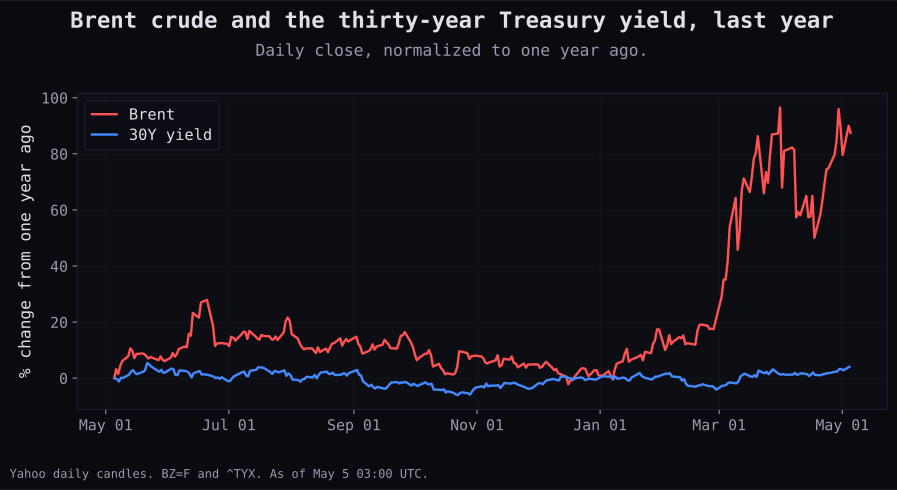
The thirty–year Treasury yield closed at 5.02%, up about five basis points on the day, the first close above five since this conflict began. The ten–year closed at 4.45 and the two–year at 3.95, both up roughly six basis points.
The long bond crossing the level was the more meaningful print. A parallel shift across the curve says inflation re–pricing rather than a steepener for growth.
The dollar lost half a percent on the week and the yen strengthened two percent against it. A war–scare flight buys the dollar; this one bought yen.
Combined with a long bond crossing five and an oil shock at the front of the curve, the move reads as a stagflation re–pricing, not a flight to U.S. sovereign safety. Home Depot, Lowe’s, and the homebuilders ETF all printed one–month lows on the back of the move, which is what the long end at five does to mortgage spreads.
The catalyst was Iran. An Iranian drone got past the U.A.E. air–defense net before dawn and lit a fire at the Fujairah Petroleum Industries Zone, the pipeline that ends at the Gulf of Oman because it was built to bypass Hormuz. The U.A.E. intercepted twelve ballistic missiles, three cruise missiles, and three other drones.
Brent ran above $115 on the wires around 17:00 BST, faded to near $110 when the U.S. announced “Project Freedom” convoys, bounced when Iranian boats engaged shipping in the strait, and settled at $114.44, up five and eight–tenths on the day.
Norwegian Cruise Line was the day’s biggest large–cap loser at down eight and a half percent, after cutting full–year EPS guidance from $2.38 to a range of $1.45 to $1.79. Management cited Middle East booking softness, fuel costs, and weaker European demand. A Stifel analyst noted some of the cut is brand–specific rather than industry, but the conflict–sensitivity is real on the European routes.
The Tuesday after–hours print to watch is AMD, on consensus of $1.27 EPS and $9.84 billion in revenue. The Friday print to watch is non–farm payrolls.