One-day moves, August 11
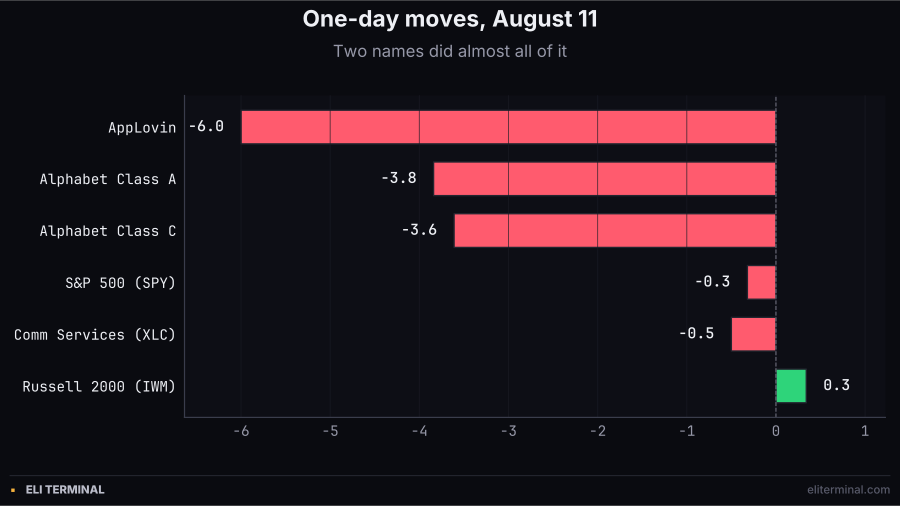
Two names carry almost the entire session. The fund that holds both of them barely moved.
AppLovin lost 6.0% on a same-morning analyst downgrade and Alphabet fell 3.84% for no reason anyone published, both in the same quarter hour the market opened, while the Russell 2000 closed green.
Two names carry almost the entire session. The fund that holds both of them barely moved.
13:30 UTC is when the New York session opened Tuesday, and it is also the exact quarter hour AppLovin, Alphabet, and the S&P 500 each posted their sharpest move of the day. AppLovin's bar for that fifteen minutes ran from 329 down to a low of 319.50 on 2.46 million shares. Alphabet's ran from 355.90 to a low of 350.65 on 2.27 million shares, roughly forty times the volume in any bar that preceded it that morning. Neither company had anything in common except the minute their stock broke.
Bank of America cut AppLovin to Neutral before Tuesday's bell, trimming its price target to 400 from 430 and its 2027 revenue growth forecast to 23% from a prior 31%. The note's actual argument was narrower than the headline: analyst Justin Post questioned whether AppLovin's advertising gains still come from its self-learning model or increasingly from engineer-directed tuning of the gaming algorithm, a distinction that matters for how durable the growth is. AppLovin closed at 318.68, down 6.0% on the day and 39% below its June 18 high.
Financial media filled the gap with old news. Several outlets tied Tuesday's 3.84% decline in Alphabet's Class A shares to a raised capital-spending forecast of up to 205 billion dollars for 2026 and to Demis Hassabis stepping back as DeepMind's chief executive. Both are real, and neither is Tuesday's: the capex figure came from Alphabet's earnings call on July 22, three weeks earlier, and the DeepMind change was announced August 5, six trading days before this one. A search across Tuesday's wires turned up nothing about Alphabet that wasn't already public before the stock opened.
Alphabet never recovered from that 13:30 UTC low of 350.65, closing the session at 343.80, not even a point and a half off the bottom and near its worst level of the day. Whatever moved it, the move held.
The Communication Services ETF, XLC, which counts both Alphabet and AppLovin among its holdings, closed down just 0.50% while the two stocks inside it fell 3.84% and 6.0%. Something else in the fund was flat or green enough to absorb most of the damage. That is not what a sector-wide selloff looks like; it is two positions getting sold inside a basket that otherwise held its ground.
The Russell 2000 gained 0.34% on Tuesday, the only one of the day's four major indexes to close in the green. Small-cap stocks carry none of Alphabet's AI-capex exposure and none of AppLovin's ad-model questions, and they went the other way. A broad risk-off session does not usually leave the small-cap index higher while two specific large-caps get taken to the woodshed.
West Texas crude opened Tuesday near 82.40, fell to 81.66 by 11:00 UTC, recovered into the London close, fell again to 81.27 by 13:45 UTC inside the same window AppLovin and Alphabet broke, and then climbed back through the afternoon to trade above 83.40 by evening. The round trip covered roughly 3.7% peak to trough and landed close to flat. Trump's demand Monday that Iran pay reparations for "fifty years" of damage, and Tehran's own conditions for reopening the strait, kept the headline live without giving the barrel a clean direction.
Monday's oil spike pushed the market pricing a September rate hike from 35.5% to 43.5% in a single session, nine points of Fed repricing on an energy move with no American data behind it. Tuesday's crude round trip was nearly as large and the hike bet went the other way, falling back to 38.5% on Kalshi and 38.5% on Polymarket, giving back roughly half of Monday's move. The 10-year yield closed at 4.684%, essentially flat versus Monday's 4.699%. Whatever channel let oil move the Fed-pricing market a day earlier did not fire the same way on a comparable move Tuesday.
Volatility eased on a down session, another piece that doesn't fit a fear story: the VIX closed at 15.28, down 1.16%, while the S&P fell 0.32%. A market pricing broad risk would have bid the VIX up, not down, on the day two of its most-watched growth stocks got sold hard at the open.
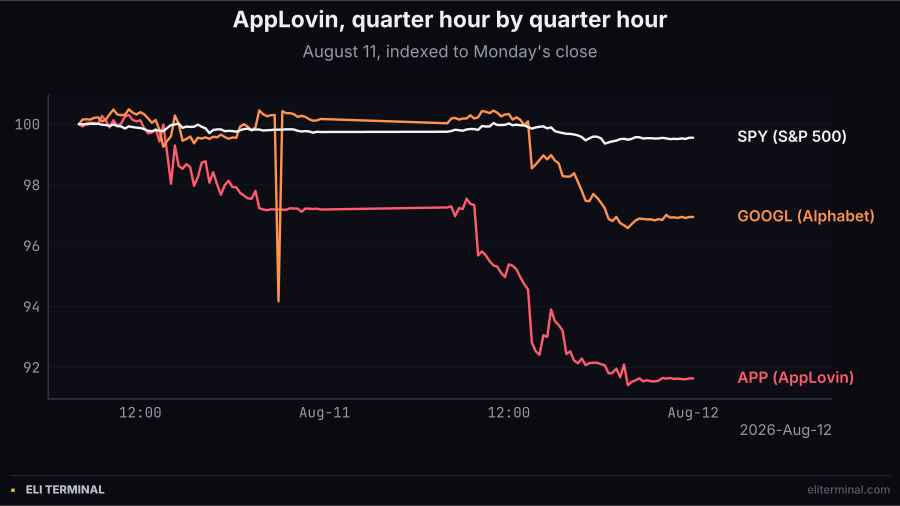
Same fifteen-minute bar, three tickers, two very different-sized moves.
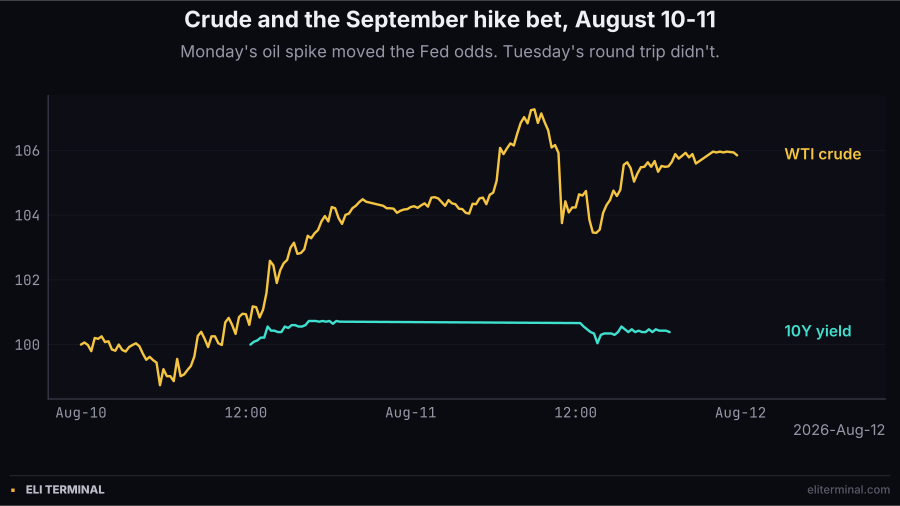
Monday's line moves together. Tuesday's oil swings and the yield barely notices.
12:30 UTC Wednesday is when July's consumer price index prints, the same release Monday's report flagged as the next real test of the oil-to-rates channel. A hot core number would argue Tuesday's pullback in hike odds was noise inside a still-live inflation scare. Alphabet, separately, gets no scheduled news before its next earnings call, so any further move from here has to explain itself the way Tuesday's did not.