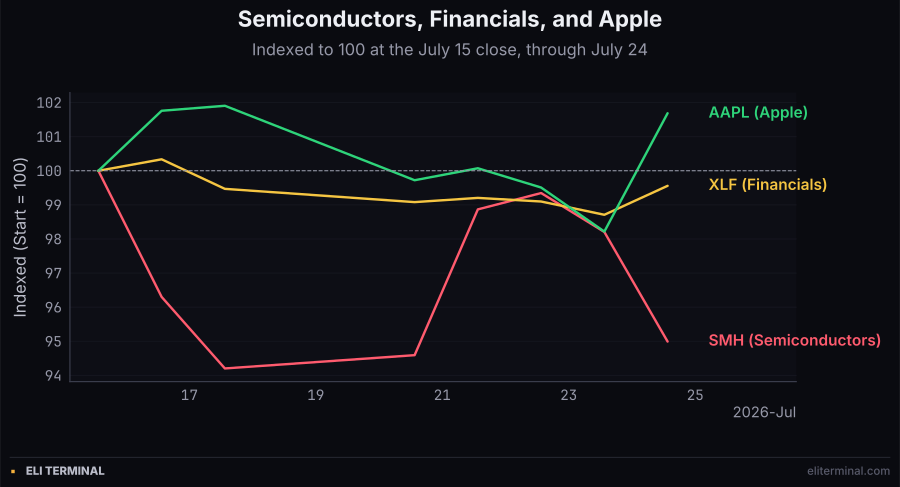
Each indexed to 100 at the July 15 close. The three lines track the week together until July 23, then split into Friday: semiconductors down, financials and Apple up.
Intel beat on revenue and fell 7.9% on a bigger spending guide, the memory chips dropped with Seoul, and Apple rose 3.5%, all on a day the S&P 500 closed up 0.05%.
Each indexed to 100 at the July 15 close. The three lines track the week together until July 23, then split into Friday: semiconductors down, financials and Apple up.
7,411.98 is where the S&P 500 finished Friday, up 0.05%, the kind of close that reads as a day when nothing happened. Underneath it the Dow rose 0.46% and the Nasdaq Composite fell 0.64%, and the distance between those two was the whole session.
18.58 is where the VIX closed, down on the day, even as the Nasdaq-100 fell more than 1% on the QQQ. A tech tape selling off while the fear gauge eases is not a market cutting risk; it is a market moving money from one place to another. The flat index was a cancellation, not a calm.
16.1 billion dollars is what Intel reported for the quarter, revenue up 25% and its fastest growth in about fifteen years, and the stock fell 7.9% on Friday to 92.32. The beat was not the story. The spending was: Intel lifted its 2026 capital-budget guide above 20 billion dollars and pointed to a higher number in 2027.
13% was the gain Intel put on in Thursday evening dealing, before it gave all of it back and more once the capital line was read in daylight. It reported after Thursday's close, jumped on the revenue, and gave it all back the next day. The revenue grew 25%, and it did not matter.
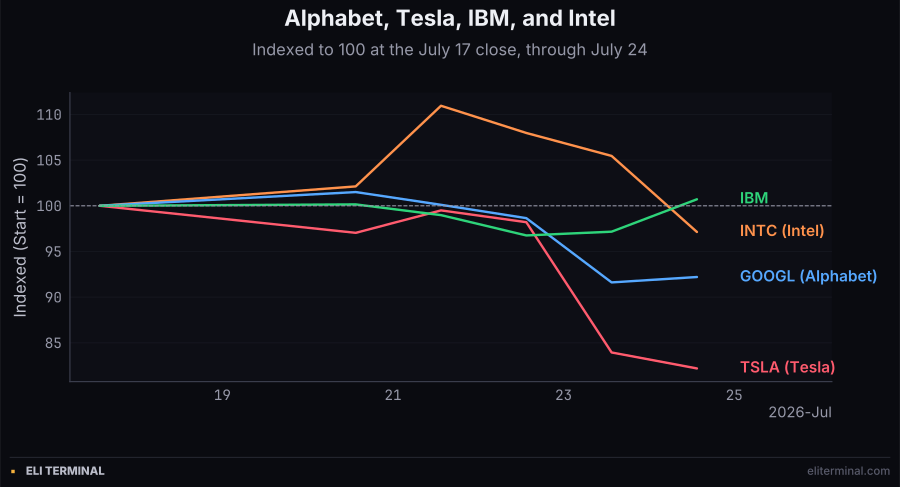
Each indexed to 100 at the July 17 close. IBM, which cut its revenue outlook, is the only line above where it started. Intel, which beat, is the one falling fastest into Friday.
319.74 is where Alphabet closed Friday, up 0.65%, its first green session since it reported a 44.9 billion dollar quarterly capital budget and a halted buyback earlier in the week. Tesla fell 2.08% to 313.03, a fraction of the 14.5% it had lost the session before, and Texas Instruments trimmed its decline to 1.9%. The reports that broke the tape midweek had stopped breaking it.
214.19 is where IBM closed, up 3.65%, above where it traded before it cut its full-year revenue-growth outlook to a range of 4 to 5%. The company that lowered its top line finished the week higher; the companies that grew revenue more than 20% finished it lower. Friday paid for the cash behind the growth, not the growth.
15% is what Nebius lost on Friday, with Bloom Energy down 14.9%, CoreWeave down 11.4%, and Micron and the chip index down 7.0% and 3.3%. None of these companies reported on Friday. What they share is a capital budget: the companies that rent out computing power, the data-center power suppliers, and the memory makers are the parts of the market spending the most to build artificial-intelligence capacity, and the drop carried the memory names down with Seoul's overnight session.
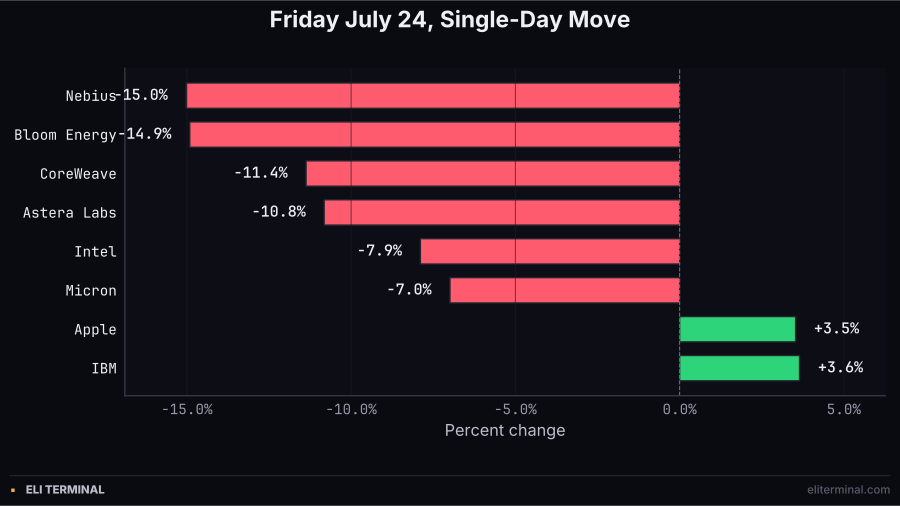
Friday's largest single-day moves, sorted by size. The losers are the names spending to build AI capacity. The two gainers are not.
3.5% is what Apple gained, to 333.02, on a deal to build its Maps software into Ford vehicles and a raised price target from Morgan Stanley, and the financials rose 0.86% on the day. The money leaving the capital-spending names went to the parts of the market that do not carry the same build cost. Digital Realty, the landlord that collects rent on data centers rather than paying to fill them, rose 11%.
90.47 is where West Texas crude settled, down 1.9%, with Brent down 2.3% and back below 100 after a report that Pakistan was pushing to restart talks between the United States and Iran. The supply premium that had run oil up more than 8% on the week bled off its top, and the geopolitical bid that would have made this a risk-off day was easing rather than building.
53.6 was the S&P Global flash reading on July business activity, an eight-month high with the steepest rise in input prices in about four years, and the 10-year Treasury yield fell about 2 basis points to 4.68% anyway. A hot growth-and-inflation print landed at mid-morning and the bond market looked past it to the oil tape. With the Federal Reserve in its blackout before the July 28 and 29 meeting, rates took their cue from crude, not from the data.