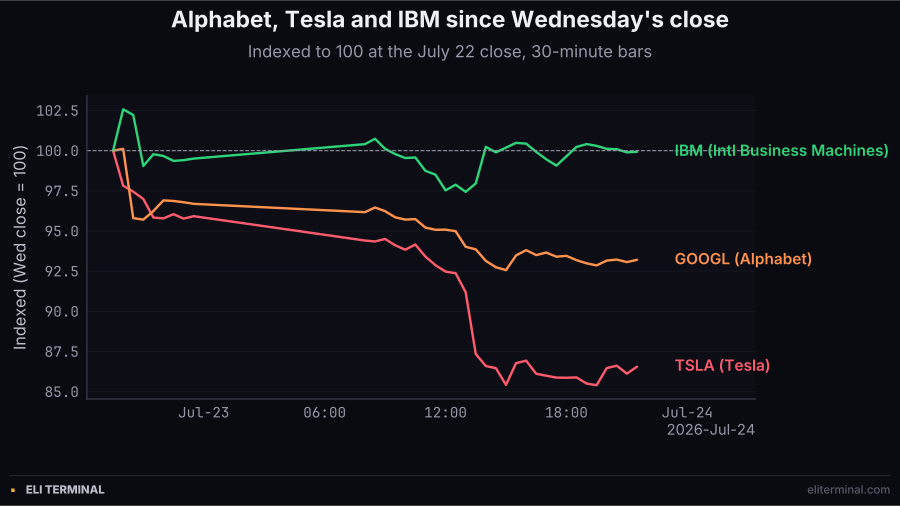
Each indexed to 100 at Wednesday's 4pm close. Alphabet and Tesla stepped down after the bell, then fell further at Thursday's open; Tesla made its low into the close. IBM dipped and recovered to finish green.
Tesla fell 14.5% and Alphabet 7.1%, well past their thin after-hours drops, once regular-session volume arrived, while IBM, which alone cut its outlook, closed up 0.4%.
Each indexed to 100 at Wednesday's 4pm close. Alphabet and Tesla stepped down after the bell, then fell further at Thursday's open; Tesla made its low into the close. IBM dipped and recovered to finish green.
7,408.30 is where the S&P 500 finished Thursday, down 1.21%, the kind of close that reads as a quiet day. The event was that the two mega-cap earnings reactions that looked contained after Wednesday's bell were not contained once the market reopened.
4.3% and 3% were the initial after-hours drops in Alphabet and Tesla on Wednesday evening, thin prints on a few thousand shares apiece. By Thursday's close, on real volume, those had become 7.1% and 14.5%. The overnight tape had shown a down payment, not the bill.
327.39 was the lowest Alphabet traded after the bell on Wednesday, and Thursday it opened beneath that mark, at 321.13. It kept falling, to 314.90 by 15:15 UTC, before closing at 317.69, down 7.1% on 69.4 million shares against 39.3 million the day before. The revenue beat, 119.8 billion dollars and up 24%, was never the question; the daylight tape priced the 44.9 billion dollar quarterly capital budget and the buyback cut to zero at a steeper discount than the overnight tape had dared.
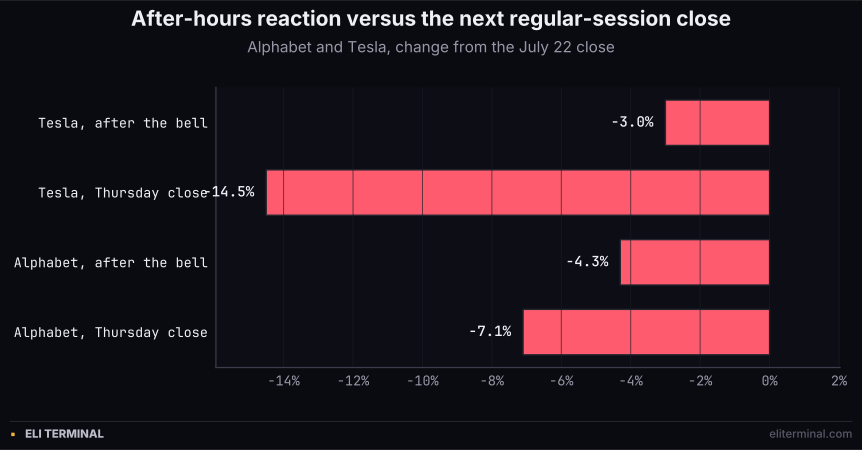
The regular-session losses ran well past the after-hours reactions, most of all in Tesla, where a 3% overnight drop became a 14.5% day.
14.5% was Tesla's loss on the day, close to five times its 3% after-hours drop and the heaviest single-name move on the tape. The stock opened at 341.00, already 8.8% below Wednesday's close, and traded lower into the afternoon on 115.6 million shares, nearly four times the prior session.
315.74 was Tesla's session low, and it printed in the final 15 minutes, at 19:45 UTC, not in the morning. A stock that gaps down on earnings usually finds its floor early and grinds back; Tesla made a fresh low at the bell and needed the closing auction to lift it off the bottom.
1.1 billion dollars of negative free cash flow, Tesla's first cash-burn quarter since 2024, was the line the selling carried, alongside a record 480,126 deliveries that no longer paid for themselves. A Reuters report hours before the open noted the company had cooled its once-bullish language on robotaxis, and the pre-market gap widened from there.
187,000 initial jobless claims landed at 12:30 UTC, far below the 212,000 economists expected and among the lowest weekly prints in years, and Treasury yields rose on it. The 10-year reached about 4.70%, up roughly 5 basis points, with the front of the curve rising more than the long end.
15:15 UTC is when the whole tape bottomed at once: Alphabet, Tesla, the S&P and the Nasdaq all at their session lows in the same quarter hour the 10-year hit its intraday high and the VIX touched 20.3. A rising discount rate falls hardest on the equity whose cash flows sit furthest out, which is precisely the mega-cap growth that had just reported. The earnings set the direction overnight; the rate move at the open set the depth.
0.67% was the Russell 2000's loss, the shallowest of the major gauges, against the Nasdaq Composite's 2.15%, the deepest. The more mega-cap growth an index carried, the more it fell, an ordering that reads as a repricing of duration rather than a fright.
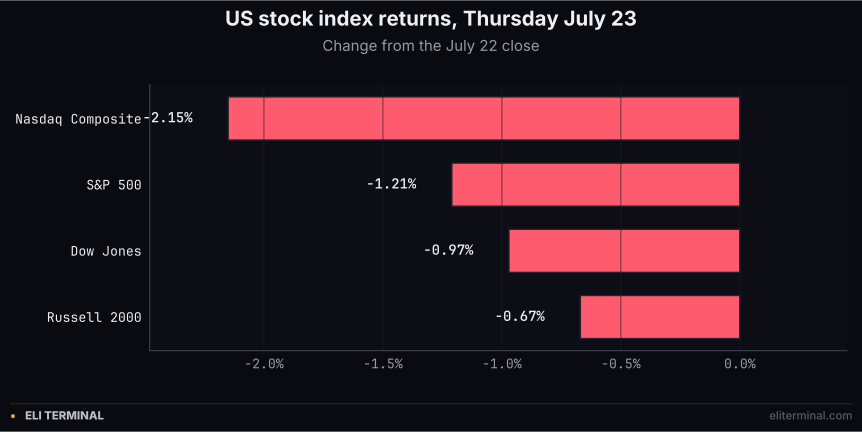
The loss deepened with each step up in mega-cap technology weight, from the Russell 2000 to the Nasdaq Composite.
1.0% was the technology sector's decline, less than half the Nasdaq Composite's, because the selling sat in a handful of the longest-duration names, not in technology at large. Healthcare rose 1.26%, Micron rose 3.2%, Raytheon rose 7% on its own results, and IBM, the one large-cap that had actually cut its outlook, closed up 0.4%, its bad news already spent in a crash nine days earlier.
4,052 was where gold settled, down 2.3%, on a day geopolitical risk rose rather than fell. Houthi drone and missile strikes on two Saudi oil tankers in the Red Sea near 12:53 UTC sent West Texas crude up 6.4% to 92.36, and gold fell anyway, its safe-haven bid overrun by the same rising real yields that were repricing the stock market. Silver fell 3.6% and copper 2.3% alongside it, the whole metals complex sold in the session's heaviest hour, priced off rising real yields rather than the war.
13.4% was Intel's after-hours pop when it reported past Thursday's close, and by 21:30 UTC more than half of it was gone, the stock holding near 5.5% above its regular close. The session that opened by proving thin after-hours prints understate real selling ended by showing they overstate buying just as easily.