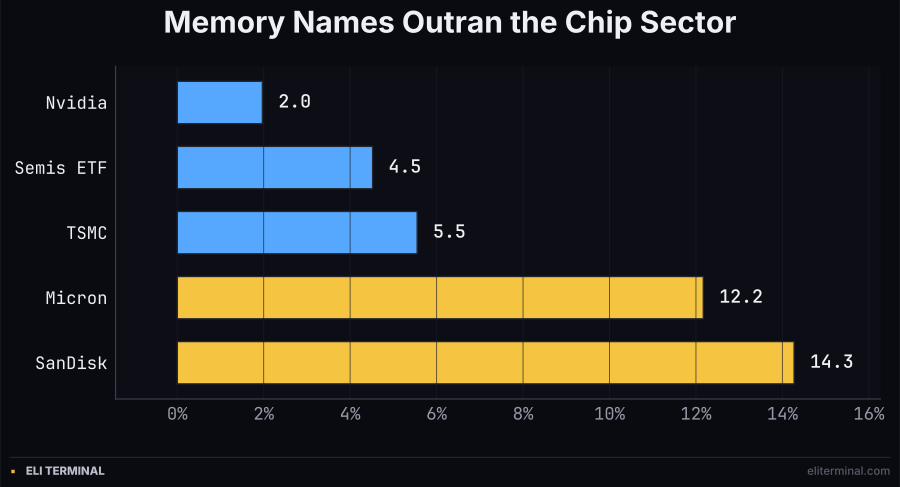
One-day moves. SanDisk gained 14% and Micron 12%, several times the 4.5% rise in the broad semiconductor group and Nvidia's 2%. The rally was specific to memory.
Micron jumped 12% and South Korea's chipmakers rebounded on a record export month, dragging the Nasdaq to its best session in weeks, while a market pricing a Fed rate hike this month climbed from about 6% to 18% and the S&P 500 closed up 0.89% with the VIX down 8.6%.
One-day moves. SanDisk gained 14% and Micron 12%, several times the 4.5% rise in the broad semiconductor group and Nvidia's 2%. The rally was specific to memory.
0.89% is what the S&P 500 added Tuesday, closing at 7,509.20, with the Nasdaq Composite up 1.29%, the Dow up 0.74%, the Russell 2000 up 1.53%, and the VIX down 8.6% to 17.05. Every major index closed green and the fear gauge fell, the picture of a clean risk-on day.
2.89% is how much the technology sector gained, roughly three times the next-best group, while consumer staples fell 0.94% and utilities finished flat. The rally was led by chips and thin almost everywhere else, and underneath the calm two markets moved on two different pieces of news: stocks on a chip-specific rebound, and the bond market on a nearer-term Fed rate hike.
12.2% is how much Micron gained Tuesday, closing at 970.82, and SanDisk added 14.3% to 1,589.40, each running several times the 4.5% gain in the broad semiconductor group and Nvidia's 2.0%. The move was specific to memory, not the whole sector.
1,550 is the Micron price target Bank of America set Tuesday morning, up from 1,500, and it added the stock to its highest-conviction list at 15:38 UTC, arguing that demand for the high-bandwidth memory tied to artificial-intelligence servers would stay supply-short into 2027. Micron's heaviest buying printed in the 14:30 to 15:30 UTC hour that followed, and the stock rose with the note.
25% is the increase in memory prices from the second quarter into the third that Morgan Stanley told clients to expect, one of a set of upgrades SanDisk carried the same morning alongside separate target raises from Bernstein and Wedbush. Not every report was rewarded: Danaher beat on second-quarter profit and raised its full-year forecast and still closed down 11%, the day's clearest case of a green tape leaving a name behind on guidance.
18.8% is how much Nebius jumped, to 216.92, after Nvidia disclosed a 9.3% stake in the Amsterdam-listed artificial-intelligence cloud company in a filing that surfaced Monday evening. CoreWeave and Oracle rose in sympathy without disclosures of their own, extending the memory story into the names that rent out computing power.
3.56% is how much South Korea's KOSPI rebounded before New York opened, with Samsung Electronics up 6.2% and SK Hynix up 4.1%, after the country reported semiconductor exports up more than 180% from a year earlier over the first 20 days of July. The bounce recovered about a third of a 10.5% drop over the two prior sessions, which a surprise Bank of Korea rate hike and a China artificial-intelligence scare had driven the week before. No fresh sell-side upgrade carried it; the buying was a reversal after the rout, and it set the chip tape hours ahead of the US open.
6% to 18% is where a market pricing a Fed rate hike at this month's meeting traveled during the session, and the most heavily traded contract, on whether the Fed holds, fell 10 points to 84%. The Fed is in its pre-meeting blackout, no policymaker spoke, and no economic data was released.
2.0% is how much both WTI and Brent crude rose Tuesday, to 84.91 and 91.01, on Gulf and Iran tension feeding inflation worries, and the 10-year Treasury yield touched a session high of 4.640% at the open before settling up 3 basis points at 4.628%. The front of the curve sold off more than the long end, the shape of a market pricing tighter policy rather than faster growth.
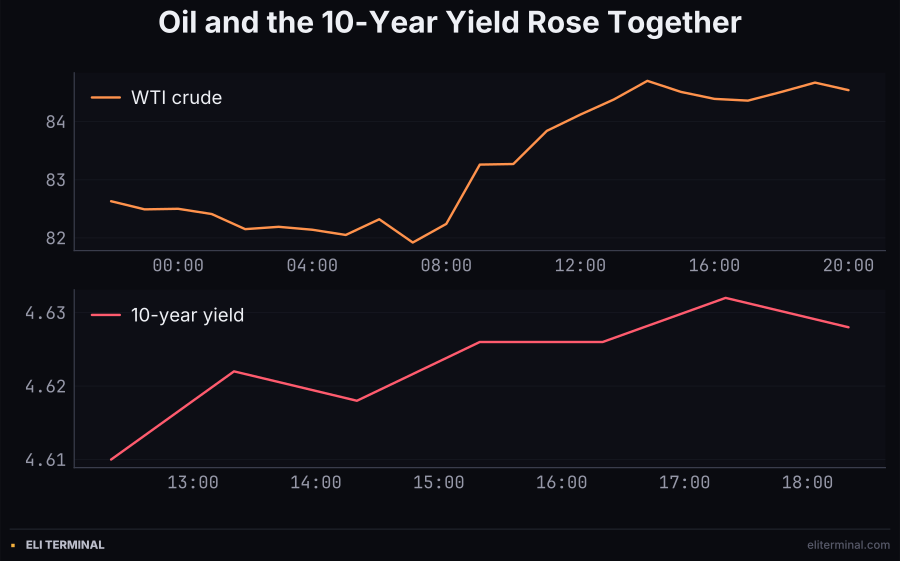
Oil rose about 2% on Gulf and Iran tension and the 10-year yield climbed to a session high of 4.640% at the New York open. The rate move ran on crude, not on chips.
13:00 to 14:20 UTC is when the dollar and the 10-year yield did their work, at the New York open, while the bet on a hike did not break until the 15:00 UTC hour and again at 19:00 UTC, with Micron's buying surge landing in between. The three moves shared an afternoon, not a trigger.
8.6% is how far the VIX fell while the hike bet roughly tripled, a calm equity tape sitting on top of a bond market turning more anxious about policy. A hawkish repricing usually caps stocks; Tuesday the chip catalyst was strong enough that the tape rose through it.
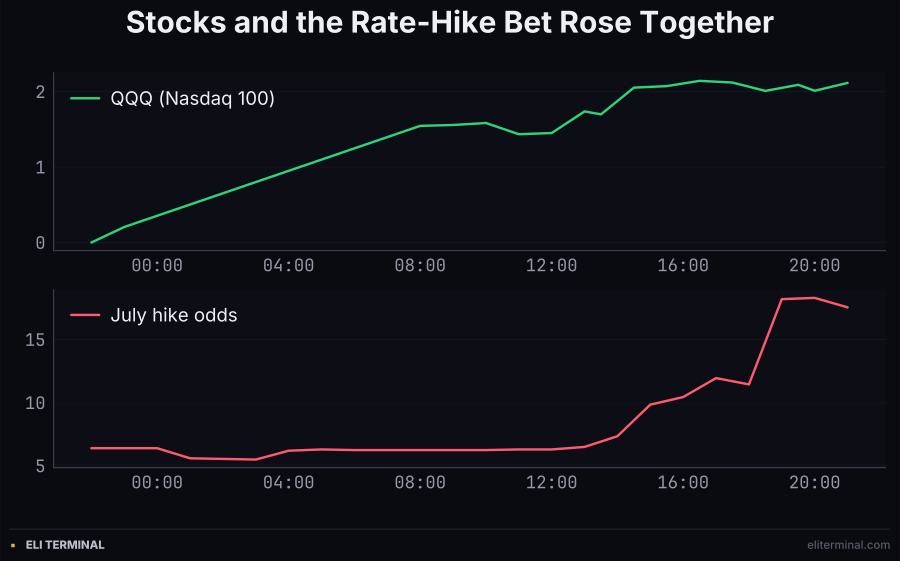
The Nasdaq climbed through the session while the odds of a July hike rose from about 6% to 18% in two afternoon steps. The heavily traded contract on a hold fell 10 points the same day.