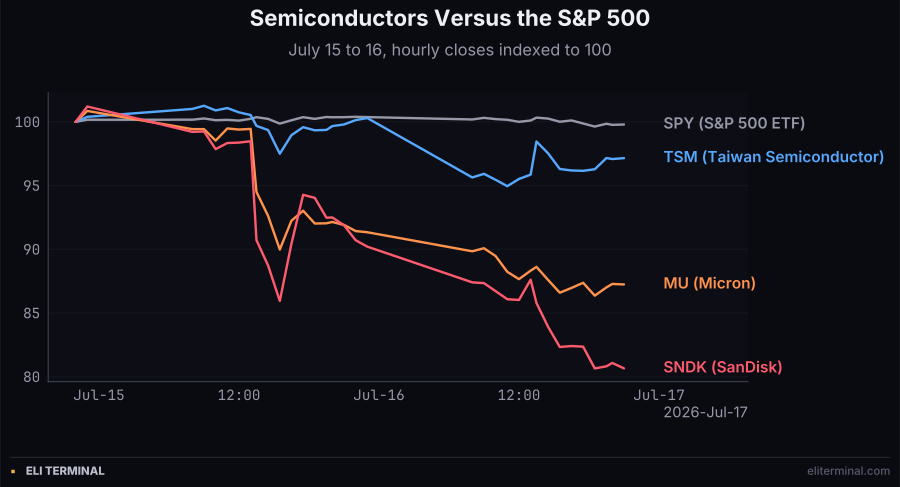
Indexed to 100. TSMC beat and raised guidance before Thursday's open, and its shares still fell 2.3% while SanDisk lost 12.6% and Micron 5.6%. The S&P 500 ETF never left 100.
TSMC beat second-quarter estimates by 11% and raised both its revenue and spending guidance, and its American shares fell 2.3% anyway while memory chips dropped as much as 12.6%; Netflix slid after the close on a soft forecast, and the S&P 500 closed down 0.51%.
Indexed to 100. TSMC beat and raised guidance before Thursday's open, and its shares still fell 2.3% while SanDisk lost 12.6% and Micron 5.6%. The S&P 500 ETF never left 100.
40.2 billion dollars is what TSMC reported in second-quarter revenue before Thursday's US open, up 33.7% from a year earlier, with a gross margin of 67.7%, the highest in its history, and earnings of 4.31 dollars per American share against a 3.87 estimate. Net income rose 77.4%. The company raised its full-year revenue growth forecast to slightly above 40%, from more than 30%, and lifted planned 2026 capital spending to 60 to 64 billion dollars, from 52 to 56 billion.
65 to 67% is the gross margin TSMC guided for the current quarter, below the 67.7% it had just posted, and the same call put a number on the squeeze. Chief financial officer Wendell Huang said the ramp of 2-nanometer production would "dilute our gross margin by about 3 percentage points to 4 percentage points in the second half of the year," with overseas fabs taking 2 to 3 points more and widening from there.
17.5% is how far TSMC's free cash flow had already fallen from the prior quarter as capital spending jumped, before the raised spending plan even lands. The stock opened down 3.4%, touched 403.50 near 17:45 UTC, and closed down 2.3% at 409.74. A record margin came stapled to guidance for a smaller one and a bigger bill, and the market sold the second half of that sentence.
Below 400 dollars is where TSMC's American shares were trading by 08:15 UTC, down almost 4.7%, more than an hour before the first wire stories asking why a company that beat on every line was falling. Those explainers arrived after 08:55 UTC. Traders had already read the 06:00 UTC call, where the dilution and spending language sat in plain text, and priced it before the summaries caught up.
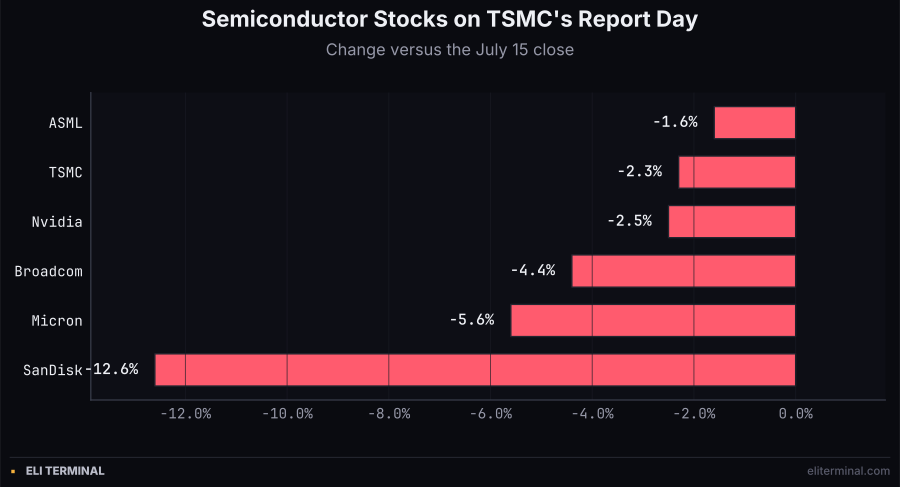
The whole chip complex fell on TSMC's report day, and the memory names took the worst of it. SanDisk and Micron dropped far harder than the logic names.
12.6% is how much SanDisk fell Thursday, the steepest in the group, with Micron down 5.6%, Broadcom 4.4%, Nvidia 2.5%, and TSMC's own shares down 2.3%. The memory names led the decline, extending a semiconductor selloff that had already run through the overnight Asian session.
6.37% is how much the Kospi fell in Thursday's Seoul session, which closed before the US open, with SK Hynix down 11.5% and Samsung 8.8%, erasing a two-day bounce. The Bank of Korea raised its policy rate a quarter point to 2.75% in the same hours, its first increase since 2023, but economists had almost unanimously expected the move and the won strengthened on it. The rout ran on the chips, not the central bank.
7.4% is how far UnitedHealth rose at Thursday's open after beating and raising its full-year forecast, and it gave back three-quarters of that to close up 1.2%. GE Aerospace beat and raised too, on earnings of 2.02 dollars a share against 1.86 expected, and its stock fell 4.1%. On a morning when the largest companies to report all cleared estimates, the tape kept selling the outlook rather than the print.
0.2% is how much June retail sales rose, matching forecasts, with the control group up 0.5% and jobless claims down to 208,000, the fewest in ten weeks. Neither print moved the tape. The 10-year Treasury yield added 2.4 basis points to 4.569%, most of it after Dallas Fed president Lorie Logan called for modestly higher rates, not on the data. Gold fell 1.4% to 3,985.60, closing below 4,000, and oil slipped 0.8%.
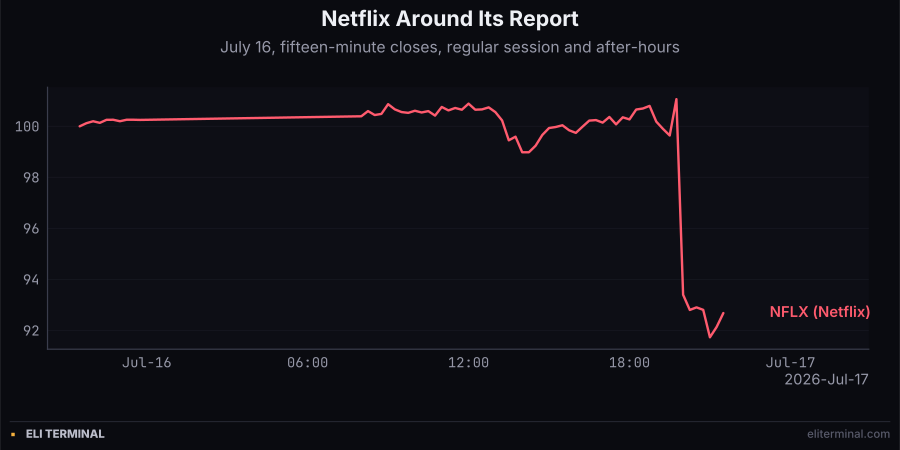
Netflix held flat through the regular session, then dropped about 8% in the minutes after its earnings release, on a third-quarter revenue forecast that came in light.
12.86 billion dollars is the revenue Netflix guided for the third quarter after Thursday's close, below the roughly 13 billion analysts had modeled, and the stock fell about 8% in after-hours trading even though it matched the quarter at 80 cents a share. Second-quarter revenue of 12.56 billion grew 13.4%, and operating margin slipped to 33.4%. The forecast, not the quarter, set the price, the same trade that ran through the chips and the insurers all day.