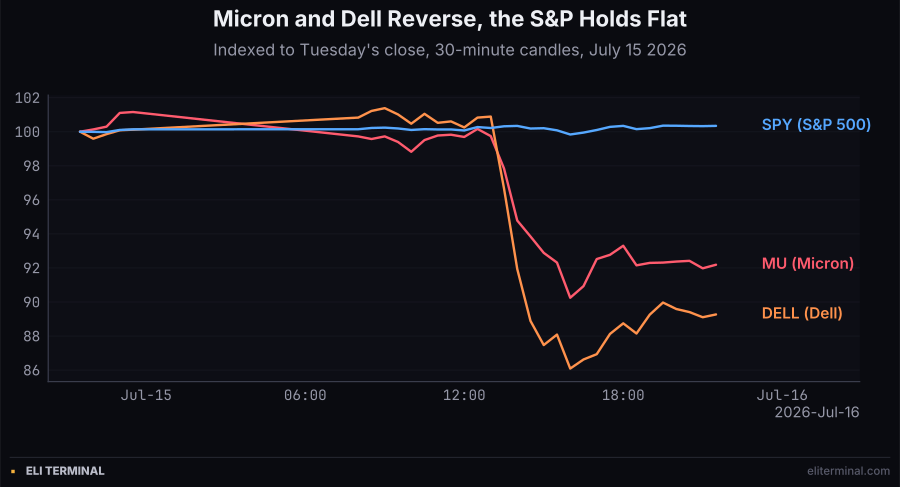
Indexed to Tuesday's close. Micron and Dell were still green in Wednesday's pre-market and gave it all back after the open, while the S&P 500 never moved.
Micron opened the pre-market above Tuesday's close and ended down 8%, Dell fell nearly 10%, and a cool June producer-price print did nothing for a market that spent the day selling the memory trade it had chased around the world, while the S&P 500 closed up 0.38%.
Indexed to Tuesday's close. Micron and Dell were still green in Wednesday's pre-market and gave it all back after the open, while the S&P 500 never moved.
0.38% is what the S&P 500 added Wednesday, closing at 7,572.40, with the Dow up 0.29% and the Russell 2000 up 0.39%. Underneath, the hundred largest Nasdaq stocks fell 0.27% while the broader Composite rose 0.62%, a split that only opens up when the biggest names drop and everything else rises.
8.02% is what Micron lost on the day, with Dell down 9.80%, the semiconductor group down 1.59%, and IBM off another 2.70%, while the banks that reported earnings before the bell carried the tape. Every large green number Wednesday was a financial. Every large red number was a chip.
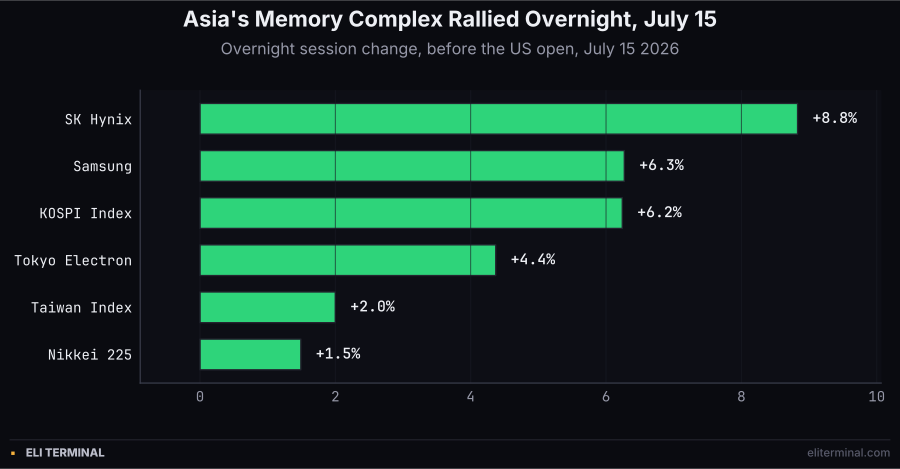
The memory complex led Asia higher overnight, the KOSPI posting its sharpest single-session gain on record, hours before New York opened and reversed it.
6.24% is what the KOSPI gained overnight in Seoul, its steepest single-session rise on record, led by SK Hynix up 8.83% and Samsung up 6.27%. The memory trade that had run since Monday on HBM demand and the read that clients are front-loading orders into scarce chips crested in Asian hours, hitting its high near 03:30 UTC before New York was awake.
1,002 is roughly where Micron traded in Wednesday's pre-market, above Tuesday's close, and Dell held its ground beside it. Both were still green when the opening bell rang at 13:30 UTC. Both reversed inside the first half hour and did not stop.
873.63 is where Micron bottomed at 16:30 UTC, down 11% from Tuesday's close, and it turned there. Dell bottomed in the same half hour at 391.12, down more than 14%. The S&P's low, the Nasdaq's low, the semiconductor group's low, and the day's high in the VIX all printed in that one candle, and a saturated search of the wires finds no headline inside the window.
15.67 is where the VIX closed, down 5.03%, after peaking at 16.57 at the exact moment the chips bottomed. Falling volatility on a day the market's most crowded trade shed a tenth of its value is the tape reading the flush as a rotation, not a scare. By the bell the dip had been bought back: Micron climbed from down 11% to down 8%, and the S&P from down 0.2% at its low to up 0.38%.
0.3% is how far producer prices fell in June, reported at 12:30 UTC against a forecast of no change, the second soft inflation reading in two days. Treasury yields, which had peaked minutes before the release, fell for the rest of the afternoon, the 5-year down 6.6 basis points and the 10-year down 4 to 4.545%. The dollar fell 0.38%, and a bet on the Fed holding rates at its July meeting, already near 92%, climbed to 96%.
Seven of the market's largest companies beat earnings estimates before the open, on a morning of cooler inflation, lower yields, a weaker dollar, and a Fed all but certain to stand pat. The market took that green light and sold its favorite trade through it.
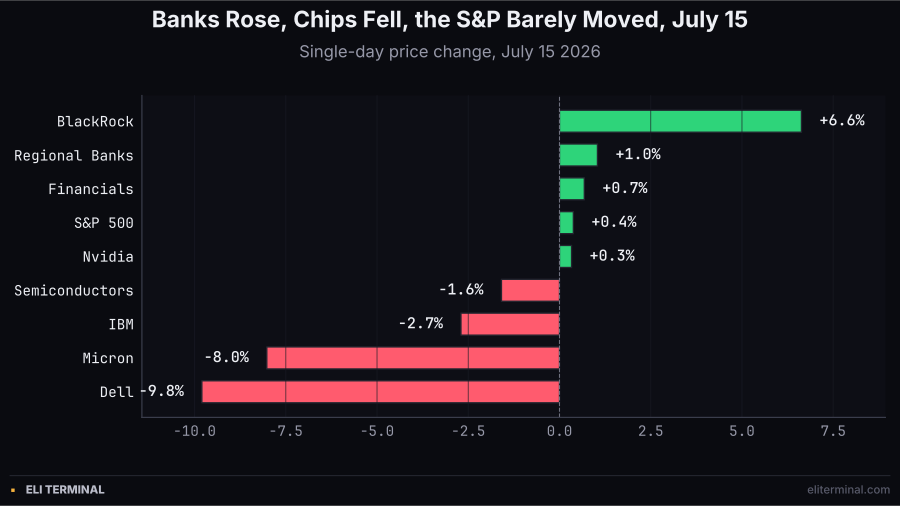
Every large gain Wednesday was a bank; every large loss was a chip. The S&P 500 sat almost exactly on the line between them.
15.3 trillion dollars is the record in assets BlackRock reported Wednesday morning, and its stock rose 6.63%, the best in the S&P 500, on 192 billion dollars of quarterly inflows. Bank of New York Mellon rose 5.08% on record custody, and PNC gained on a record in net interest income. The balance sheets that grew got paid.
9.43% is what Progressive lost after beating on earnings, its combined ratio the number the market read instead of the profit. Johnson & Johnson raised full-year guidance and fell 2.69% on a soft medical-devices line, and Morgan Stanley beat by 14% on record equities-trading revenue, touched an all-time high near 232, and gave all of it back to close up 0.39%. With the S&P near 7,572 and the VIX under 16, good news was already in the price.
3.51% is what ASML added after hours on top of its regular-session gain, having beaten and raised its outlook while quietly dropping the quarterly order-bookings figure it used to report every quarter. After the close, United Airlines beat and fell on soft guidance. The pattern held into the night: a beat was not enough, and the one trade everyone owned was the one nobody wanted to hold.