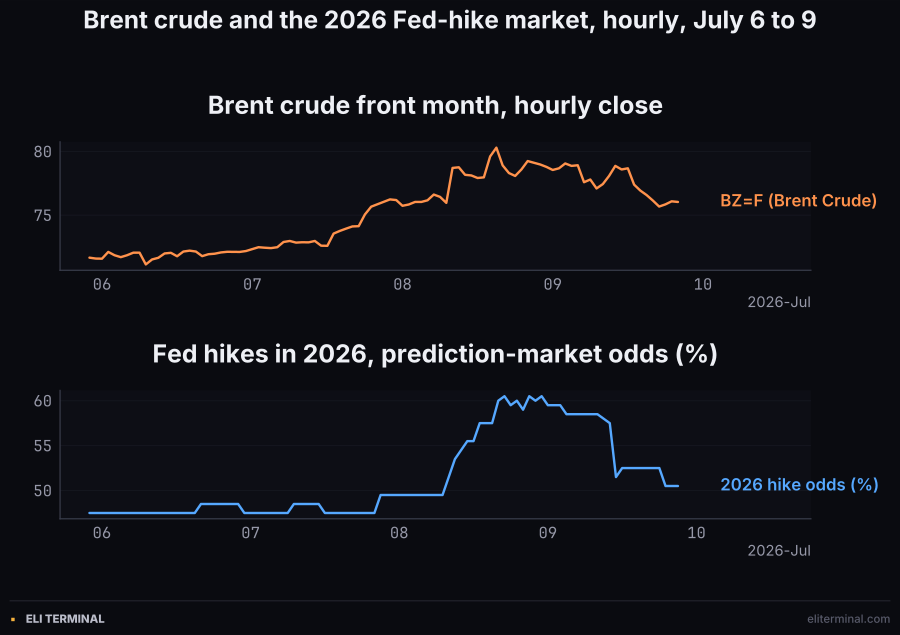
Wednesday's climb into the 80.57 high and the hike bet's run to 60.5% both came back out on Thursday; the odds cliff is the 10:00 UTC hour, before the open and before the day's only data release.
US forces struck ninety Iranian targets overnight, Iran fired back at bases in four countries, and Brent still fell 4.1% while memory stocks led the Nasdaq up 1.30%.
Wednesday's climb into the 80.57 high and the hike bet's run to 60.5% both came back out on Thursday; the odds cliff is the 10:00 UTC hour, before the open and before the day's only data release.
Ninety Iranian military targets took another round of US strikes overnight, by CENTCOM's accounting: air defenses, coastal surveillance, missile and drone storage, naval and logistics sites. The announcement crossed before sunrise in Washington, and Brent spent the hours around it falling, 78.92 at 04:00 UTC to 77.10 by the 07:00 close.
Iran's answer came in two waves on Thursday itself. Drone attacks toward Kuwait, Qatar and Bahrain crossed wires by 06:39 UTC, then the IRGC fired ten ballistic missiles at Jordan's Al-Azraq air base at 11:20 UTC, eight intercepted by Jordan's account.
Brent settled at 76.04, down 4.1%, its decisive break beginning at 13:00 UTC inside the hour the Jordan reports crossed, and WTI closed 3.9% lower at 71.81. On Wednesday, as Trump declared the ceasefire over at the NATO summit, Brent had run from under 76 to an 80.57 high by 15:00 UTC; the day the strikes actually landed took the entire spike back.
13.34 was the nine-day VIX by 14:30 UTC, down 6.1% in the hour after the Jordan missile reports, the sharpest vol move of the day. It finished at 12.50, down 13.3%, back at its July 2 level of 12.37.
Three-month vol gave only 2.4% and the VIX settled at 15.84, down 1.04 points. The S&P's pre-market prints held a half-point band through both waves of retaliation.
A 13.3% front-vol collapse against a 2.4% three-month drift reads one way: intercepted missiles and telegraphed strikes, priced as an event ending rather than beginning.
Nine of eighteen FOMC participants had a 2026 hike in their dots, the June minutes showed at 18:00 UTC Wednesday. But the bet that the Fed hikes at all this year had already climbed from 55.5% to 60.5% by 17:00, the hours Brent held its spike, and the release hour printed it lower, 59.5%. The July-meeting bet peaked at 24% two hours before the minutes and never saw the level again.
At 10:00 UTC Thursday, Bloomberg reported that the Bureau of Economic Analysis's September rebuild of the PCE price index would likely shave 0.1 to 0.3 points off measured core inflation, framed as inflation relief for Chair Warsh. In that hour the 2026-hike bet fell from 57.5% to 51.5%, its sharpest move of the week; it closed at 50.5%, down 8.5 points on the day.
Initial claims printed 215,000 at 12:30 UTC, below the 217,000 consensus, a firm labor read that argues for hikes, and the bet moved one point. The July-hike market finished near 14% from 19% at Wednesday's close. To the bond market the whole two-day Fed repricing was worth three basis points: the 10-year yield eased to 4.54%.
5.058% was the high yield on the $22 billion 30-year reopening at 17:00 UTC, the highest since 2007, and it stopped through the market by 0.3 basis points, the first stop-through since March. TLT moved 0.07% in the following half hour.
The 30-year finished at 5.05%, about a basis point lower on the day. The Treasury sold its longest bond at a two-decade-high yield in the middle of an active exchange of strikes, and the long end treated it as routine.
Kioxia rose 11% in Tokyo after Bain Capital sold its entire stake, SK Hynix gained 5.3% in Seoul, and Tokyo Electron added 5.5%, all before New York opened. SK Hynix's $26.5 billion American share sale, set to become the largest US listing ever by a foreign company, carried an order book around seven times the deal into Thursday-evening pricing and a Friday Nasdaq debut.
US memory and equipment names gapped 2.5% to 3.6% overnight before any American news printed. Micron's 12:30 UTC announcement, up to $3 billion into GlobalWafers' Texas wafer plant and a total US spending plan lifted to $250 billion, added the last leg into the bell.
Micron printed its 1,035.50 high in the first fifteen minutes of the session and faded all afternoon to close at 992.35, up 5.5%. Lam Research and Western Digital peaked inside the first half hour and faded with it. The US session spent six hours selling what Asia had bought.
SanDisk was the exception: it climbed until 18:00 UTC, touched 1,952.59, and closed at 1,854.37, up 9.0%, one week after a 23% two-session slide.
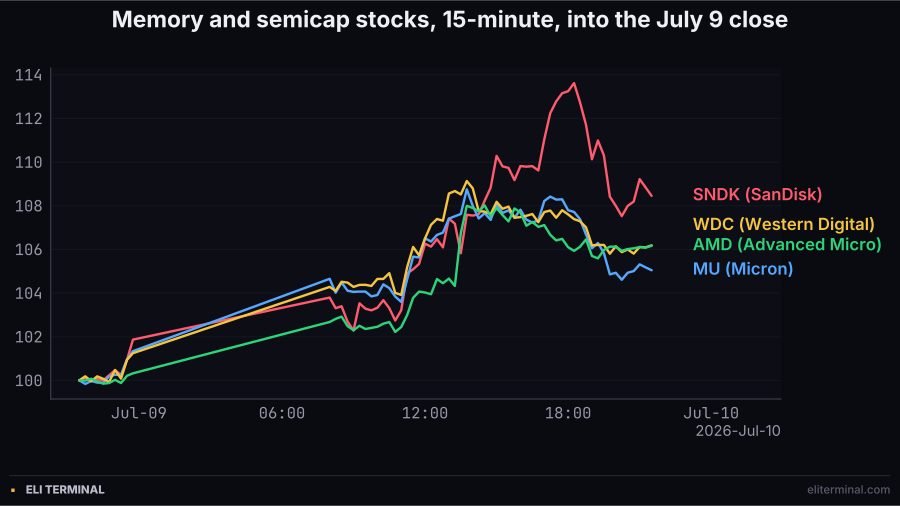
Indexed to Wednesday's close: the rise lives in the overnight and pre-market segment, the US session fades it, and SanDisk is the one name that kept climbing into mid-afternoon.
Nvidia closed at 202.54, down 0.2%, on a day the semiconductor index rose 3.2%, with AMD up 6.3%, Micron 5.5% and Broadcom 3.8%. A week ago the AI names fell together on the soft jobs print; Thursday the trade split, component and equipment makers up 4% to 9% while the platforms sat out, Microsoft up 0.2% and Alphabet down 0.9%.
PepsiCo, the day's only $100 billion earnings reporter, fell 3.4% after its second-quarter release landed before the open. Utilities slipped 0.2% and health care finished flat while financials added 0.9%; breadth beyond the complex was thin.
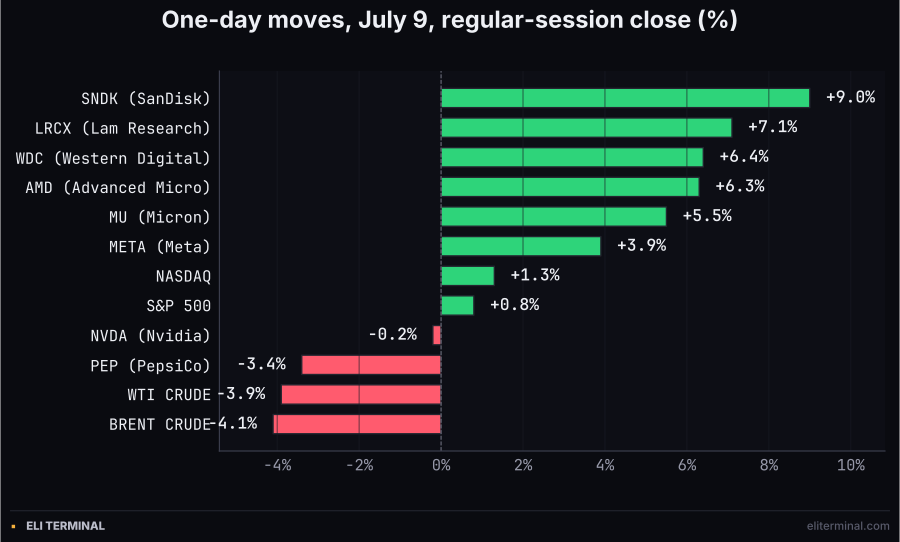
Memory and equipment led, the platform names sat out, and the war trade finished at the bottom of the day's table.
4.5% was Thursday's unchanged price on the deep market asking whether Strait of Hormuz shipping normalizes by July 31, flat through Wednesday's spike and Thursday's relief alike. Whatever the missiles changed, it was not the strait.
The year-end market putting the Fed's target at 4.5% or higher held near 4% through both legs of the hike-bet swing, and the bet on a 2026 recession sat near 10%. Gold rose 1.1% to 4,133, recovering Wednesday's minutes-day slide.
The pattern runs across every curve: nine-day vol collapsed 13.3% while three-month vol gave 2.4%, and the July-hike bet moved five points while the year-end rate distribution moved nothing. Two days of the loudest headlines of the summer repriced only what expires inside it.
SK Hynix's ADRs begin trading Friday, the first open-market read on a seven-times book. Delta reports before the bell with consensus cut 26% over ninety days, TSMC lands July 16, and the FOMC decides July 29 with the meeting bet at 14%. Between here and there, the market has told the war and the Fed the same thing: prove it past September.