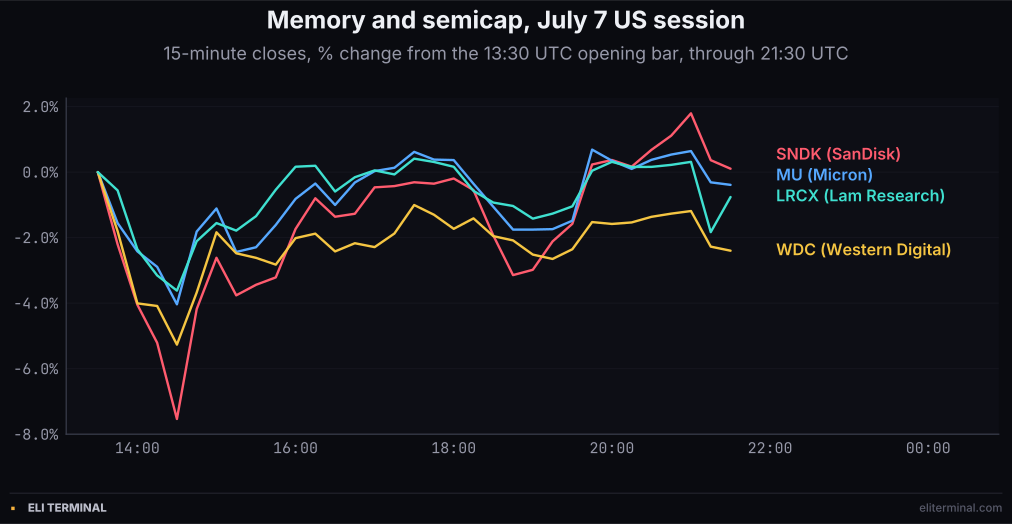
The closing prints said −4.6 to −7.9%. Measured from the New York open, the same names finished flat to higher: the entire decline was the overnight gap off Seoul's session, and the 14:30 UTC low printed in the same 15-minute bar across the group.
Samsung's record quarter got sold 6.9% in Seoul and took American memory with it; the US struck Iran, Brent ran 5.1%, and gold slipped anyway.
The closing prints said −4.6 to −7.9%. Measured from the New York open, the same names finished flat to higher: the entire decline was the overnight gap off Seoul's session, and the 14:30 UTC low printed in the same 15-minute bar across the group.
89.4 trillion won of operating profit, about nineteen times a year earlier and the largest quarter in Samsung's history, was on the tape by Seoul's Tuesday open, and Samsung closed down 6.92%. The sales guide of roughly 171 trillion won sat 0.7% below consensus, and that fraction was the excuse.
The KOSPI traded 8.2% down at its low and closed off 4.91%, with SK Hynix down 6.06%, Tokyo Electron 3.94% and Kioxia more than 11% before New York had traded a share. Asian financials and communications names rose the same session, so the selling was a rotation out of one factor, not a flight from the region.
Tuesday's was the third record memory result sold inside five weeks. Micron printed the best quarter in the industry's history on June 24 and was sold 15% across two sessions the following week; SanDisk gave up close to a quarter of its price into July 2 with no filing at all; now the largest memory maker on earth grew profit nineteen-fold and its whole complex de-rated on a fractional revenue miss. In this group, records now get sold on arrival.
1,619.86 was SanDisk's opening print, 7.1% below Monday's close and 5.4% beneath Monday's 1,713 low, before a single American share had changed hands. The entire day's decline was already in the gap.
From the bell the crash ran exactly one hour. SanDisk fell a further 8.3% to 1,485.02 into 14:30 UTC, and Micron, Western Digital, Applied Materials and Lam Research all printed their session lows in the same 15-minute bar, 10:30 to 10:45 in New York, on the heaviest volume of the day.
Then the buying ran for five hours. Micron closed at 938.91, 1.7% above its own open; Applied Materials finished 1.6% above, Lam Research 1.2%, and SanDisk at 1,619.78, eight cents from where it opened. The closing tape reads minus 4.6 to minus 7.9%; the American session's own contribution to that was flat to positive.
No headline printed in the 14:30 window. A five-name low set in one shared 15-minute bar, absorbed on the day's heaviest volume and held through the afternoon's second dip, is the signature of a complex trading as one instrument: the factor was repriced overnight, and the New York day was spent deciding the reprice had gone far enough.
196.93 was Nvidia's close, up 0.69% on the day its memory suppliers lost 5 to 8%, after the company denied a Monday report that its next-generation Kyber rack systems had slipped to 2028. The one name that sits on both sides of the compute trade, seller of systems and buyer of memory, once again refused to pick a side.
Meta rose 2.5% to 615.57, above the 612.91 it closed at on July 1 when it announced the cloud-compute business, so that selloff has fully round-tripped; Tuesday it shipped the first image model out of its Superintelligence Labs. The buyers of compute keep getting bought and the sellers of components keep getting sold; Monday rallied both sides and hid the split, Tuesday priced it.
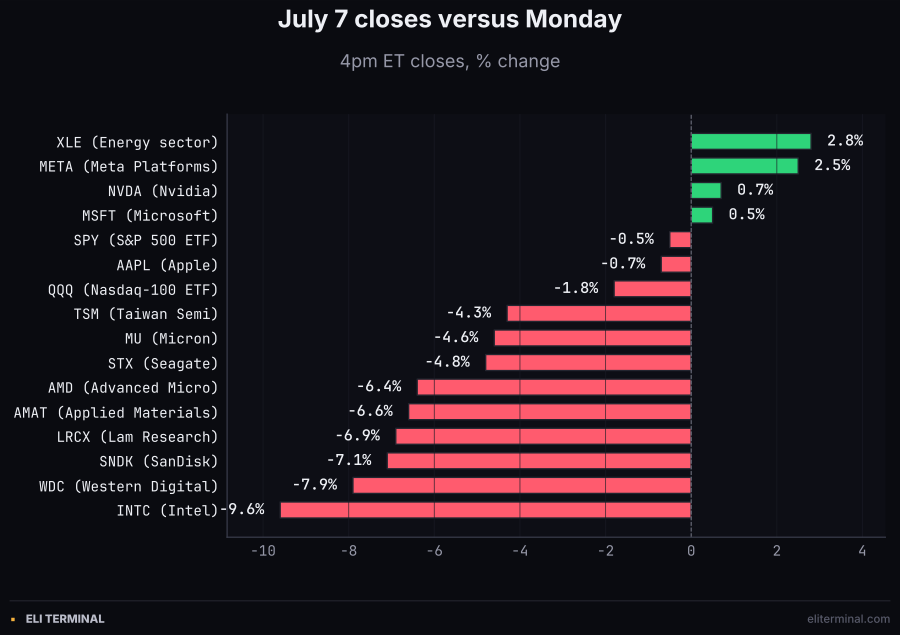
The split at the close: buyers of compute and the barrel bid, sellers of components repriced. Nvidia, which is both, finished 0.7% from flat.
21:19 UTC Monday is when Axios reported Iranian missiles hitting two tankers near the Strait of Hormuz, a Qatari LNG carrier and a Saudi crude carrier; a third ship was hit at 10:15 UTC Tuesday, and the US-led naval coalition raised the strait's threat level to severe. By 19:13 UTC Treasury had revoked the waiver that let Iranian crude keep trading, and at 21:25 Central Command confirmed strikes on more than 80 targets inside Iran, per CBS's live coverage.
Brent settled 3% higher at 74.16 and kept climbing after the equity close, 75.86 by evening, up 5.1% from Monday, with the second leg running through the 17:00-to-18:00 UTC hour in which the first strike reports crossed the wires. The market pricing a US blockade of Iran by July 31 doubled from 9.5% to 18% between 18:00 and 19:00 UTC, the largest odds move of the day; the market on Hormuz traffic returning to normal by July 15 priced about 1%.
Gold fell 1.2% to 4,116.60 from Monday's two-week-high close. It carried a small bid into the tanker headlines, 4,184 at 12:00 UTC, then sold for the rest of the session, declining every single hour from 17:00 UTC into the close across the identical window in which crude rose 2.5%. Whoever bought protection on Tuesday bought barrels, not insurance.
The 10-year yield rose 5 basis points to 4.53%, a grind across the whole session rather than a jump at the strike headlines, so bonds sold on a war day too. Silver lost 2.9%, the yen sat at 162, high-yield credit closed flat, and the VIX finished at 16.13, while energy stocks rose 2.8%. Hedges down, volatility asleep, credit indifferent, the barrel up 5%: that tape prices a supply shock that feeds inflation, not a shock that feeds fear.
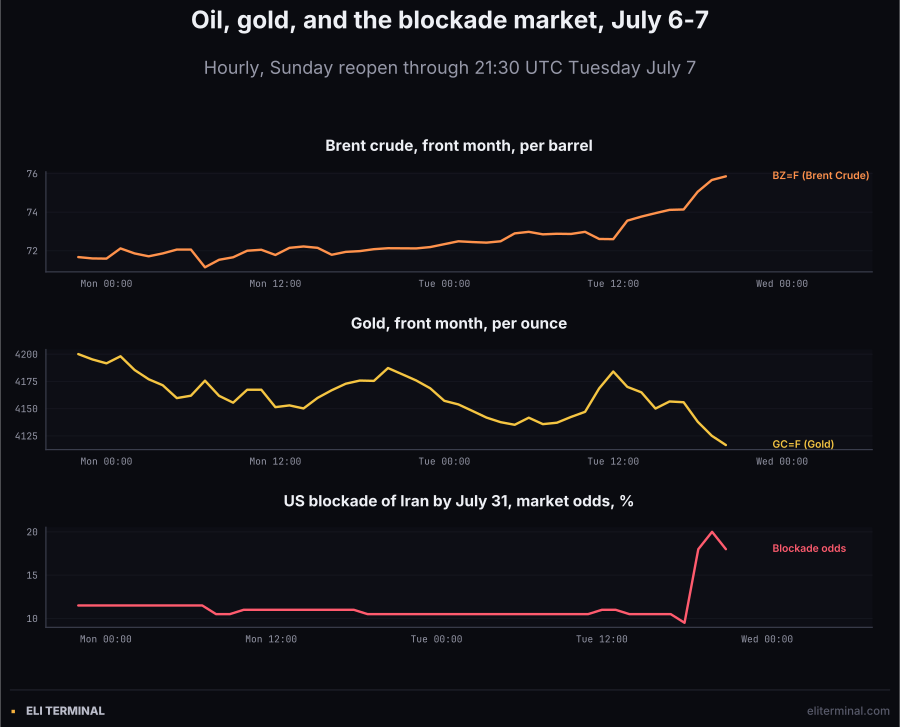
The war trade in three layers: the barrel bid all day, the blockade market doubling in one afternoon hour, and the hedge, gold, declining straight through the strike window.
7,503.85 was the S&P's close, down 0.45%, and the path matters more than the level: the index absorbed the chip gap by midday, recovering to within 0.3% of flat at 16:30 UTC, then faded through the 17:00-to-19:00 window in which oil took its second leg, the VIX popped 2.5%, and Treasury pulled the waiver. The morning selling ran on Seoul's clock; the afternoon selling ran on Tehran's.
The Dow closed down 0.25%, 131 points off Monday's record, and the Nasdaq lost 1.16%, with SpaceX trading its first session as a Nasdaq-100 member inside a falling index. Tesla lost 4.0%.
Intel lost 9.6% with no company news at all, and unlike the memory names it kept printing new lows into 19:15 UTC. New York bought back the group with the record earnings and sold harder the one chip name without them; the dispersion inside the selloff was a judgment, not a panic.
82% was the closing odds of a July 29 Fed hold on the deepest policy market, off three points on the day, with 2026 recession odds flat at 10%. A sector crashed and a war escalated, and the policy market barely moved: the repricing stayed in the barrel and the long end.
The $58 billion 3-year auction stopped at 4.179% at 17:00 UTC and rates ignored it, the 10-year unchanged an hour later. Wednesday's June minutes will show how much of the committee's hawkish lean, nine of eighteen officials penciling a 2026 hike while Chair Warsh withheld his own dot, was built on energy prices. Tuesday re-armed exactly that channel.