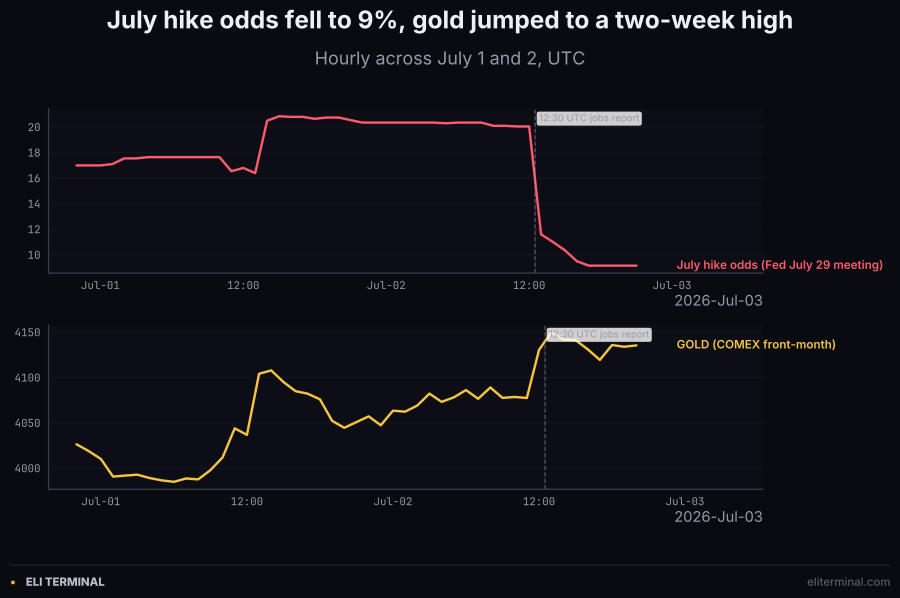
Both moves fell inside the single hour after the 12:30 UTC payrolls miss, the odds market pricing out July while the metal bid the same softer-Fed read.
June payrolls came in at 57,000, half of forecast; the July Fed-hike bet fell to 9%, and rate relief pushed the Dow up 595 points to a record.
Both moves fell inside the single hour after the 12:30 UTC payrolls miss, the odds market pricing out July while the metal bid the same softer-Fed read.
June payrolls rose 57,000, less than half the roughly 115,000 economists expected, when the Bureau of Labor Statistics released the report at 12:30 UTC, a Thursday slot because Friday July 3 was the Independence Day market holiday.
74,000 jobs vanished from April and May in downward revisions, and the unemployment rate fell to 4.2% from 4.3% only because labor force participation dropped to 61.5%, its lowest since March 2021. A falling jobless rate built on people leaving the workforce is not the strong read the headline suggests.
The July rate-hike bet on the odds markets fell from 20% to 12% in the hour of the release, the biggest odds move of the day, then kept sliding to 9% by the close. A separate exchange's July hike contract dropped to 11% from 20% over the day.
September hike odds fell nearly as hard, from 34% to 25%, and the bet that the Fed hikes at all in 2026 slid from 54% to 47%, so the repricing hit the whole tightening path, not just July. Weak payrolls did not read as recession: the odds of a 2026 downturn eased to under 10%.
The Dow Jones Industrial Average closed at 52,900.07, up 595 points or 1.14%, a record, as the rate-sensitive value trade took the full benefit of a softer Fed path.
Apple led the average with a 4.84% jump to 308.63, its best day in months, with McDonald's up 4.16% and Disney 3.96%, the old-economy breadth that lifts a price-weighted index. Two thirds of the Dow's gain came from names outside the AI trade.
Health care rose 2.63% and utilities 2.21%, the two most rate-sensitive defensive sectors, while financials added 1.53% and Microsoft, the one mega-cap on the right side of the split, gained 1.62%.
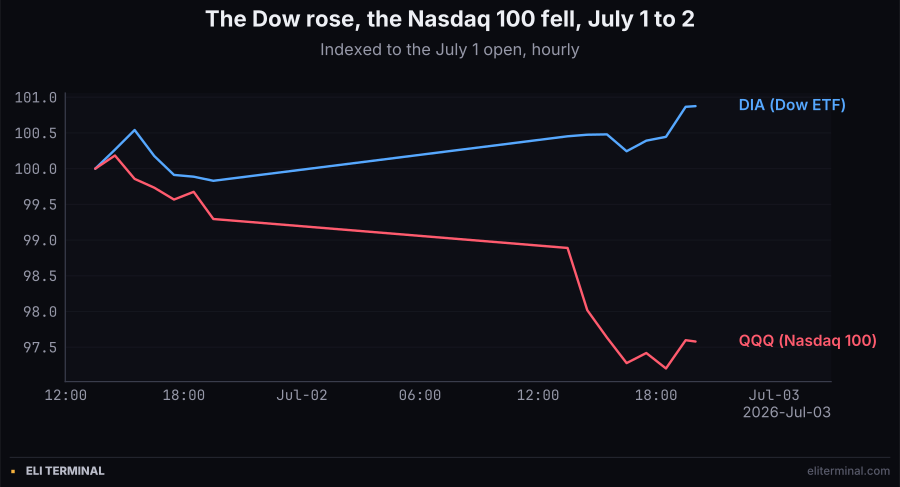
The gap opened almost entirely after the 12:30 UTC payrolls window, nearly three points of spread from the same rate relief that lifted the average and sold the growth names.
The Nasdaq Composite fell 0.80% to 25,832.67 and the Nasdaq 100 proxy dropped 1.73%, the same rate relief selling the stocks that led the first half. The S&P 500 finished unchanged at 7,483.24 and the volatility index eased to 16.2, the flat headline hiding a violent rotation.
Micron lost 5.49% to 975.56, back below 1,000 and down about 15% in two sessions, while Applied Materials fell 7.35% and Advanced Micro Devices 4.26%, the semiconductor complex bearing the brunt.
Meta dropped 4.90% and Taiwan Semiconductor 2.27%, with the technology sector down 2.71% and Nvidia red at 1.39%, so the selling was specific to the AI winners rather than a broad decline.
Apple's 4.84% gain and Micron's 5.49% loss trace to the same memory shortage. Apple is in talks to buy memory chips from China's ChangXin and Yangtze Memory for its China-market phones, routing around a cost spike, and it raised its foldable-iPhone production target to 10 million units.
Five Form 4 filings by Micron insiders landed this week, three on Thursday alone, and their stock sales deepened a second-day slide already driven by Meta's plan to build its own cloud compute and a class-action suit accusing the memory makers of restricting output. The shortage that made Micron's quarter a record last week became the reason to sell it once the AI-spending question turned.
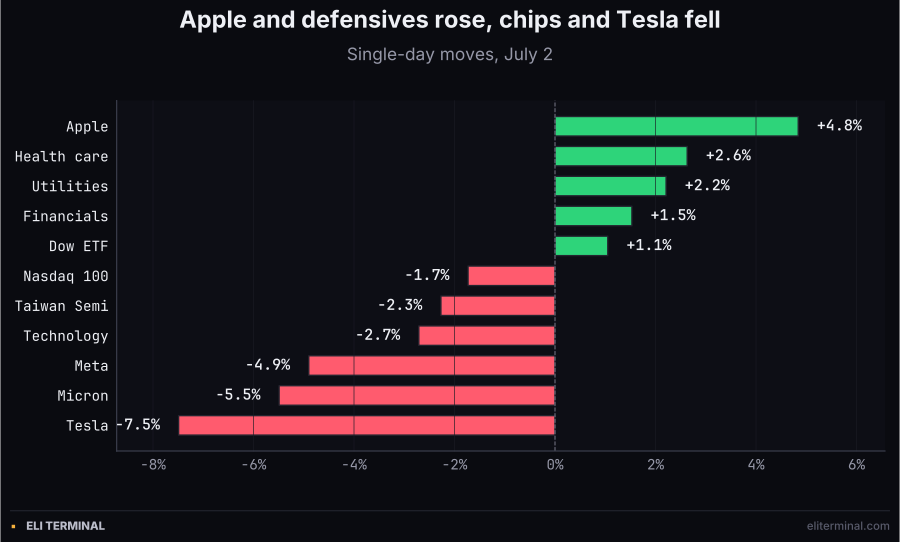
The bid went to rate-sensitive value and defensives, the selling to the semiconductor and mega-cap names that led the first half. Two thirds of the Dow's gain came from outside the AI trade.
Tesla fell 7.49% to 393.45, its worst day in nearly a year, even though second-quarter deliveries of 480,126 vehicles beat the roughly 406,000 Wall Street expected and set a company record, up 25% from a year earlier.
428 was where Tesla opened, gapping up on the delivery beat, before it lost more than 7% in the first hour and never recovered, the third straight delivery report the stock has fallen on. A record quarter met a stock that had already run into it.
The 10-year Treasury yield dipped to 4.45% after payrolls, then round-tripped to finish about one basis point higher on the day near 4.48%, so the bond market faded the dovish read the odds market ran with. The clearest disagreement of the day sat between the rate market and the rate-bet market.
2.47% was Bitcoin's gain to 61,485, alongside gold up about 1.7% to a two-week high and the dollar index down 0.52% to 100.86, three hard-asset moves that pivoted together on the softer-Fed read. Gold's futures hit an intraday high of 4,157 during the payrolls hour before settling near 4,135.
All three major averages posted gains for the holiday-shortened week, the Dow up about 2.0%, the S&P 1.8% and the Nasdaq 2.1%, carrying a record Dow into the July 4 close.
July 29 is the FOMC decision the market just repriced toward, with the hike bet down near 9% and gold at a two-week high. Whether both hold through the meeting will show if one jobs report reset the path or only the day.