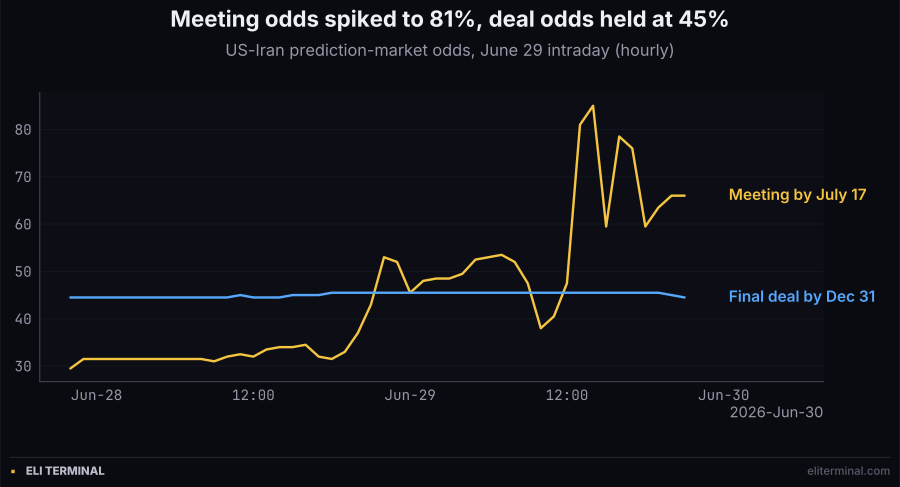
Iran's negotiator denied a session was scheduled hours after the spike, and the meeting line faded to 66% by the close. The final-deal line never twitched, the gap between sitting at a table and reaching an agreement left wide open.
The Dow closed above 52,000 for the first time as odds on a US-Iran meeting jumped to 81% in an hour, and Tesla ran 8.46%.
Iran's negotiator denied a session was scheduled hours after the spike, and the meeting line faded to 66% by the close. The final-deal line never twitched, the gap between sitting at a table and reaching an agreement left wide open.
At 11:45 UTC, President Trump posted on Truth Social that Iran had requested a meeting and that it would take place the next day in Doha. Odds on a US-Iran diplomatic meeting by July 17 sat near 45% before the post and had drifted as low as 38% in the 10:00 UTC hour.
By the 13:00 UTC hour that market hit 81%, a jump of roughly 33 points in sixty minutes, after Reuters reported at 12:27 UTC that an Iranian source confirmed technical talks in Doha on Tuesday. That single candle was the move of the day on the odds markets.
At 13:17 UTC, Iran's senior negotiator denied that working-group meetings were scheduled, and the Foreign Ministry said at 19:06 UTC that its delegation would hold no negotiation meetings with the US at any level. Those denials pulled the meeting market back from an intraday peak of 85% to 66% by the close.
The market on a final US-Iran nuclear deal by December 31 opened near 45% and closed at 44.5%, flat across every hour of a session that repriced the meeting by 20 points. Traders bought the odds of people sitting at a table and left the odds of an agreement untouched.
The market on Iran charging Strait of Hormuz transit fees by August 31 moved the other way, rising from 29.5% to 44.5% on the day. As the talks got priced in, so did the read that Iran keeps its leverage over the strait, which is the specific dispute the two sides have not resolved.
The 60-day negotiation-window market drifted up from 60.5% to 64%, the quiet tell that sits under the noise. The odds markets treated June 29 as an extension of talking, not a step toward a resolved outcome.
The Dow closed at 52,182.74, up 0.59% and above 52,000 for the first time, after touching an intraday high of 52,311.63. The de-escalation read was enough to carry the blue-chip average through a round number it had never crossed.
The Nasdaq Composite rose 2.07% to 25,820.14 and the S&P 500 1.18% to 7,440.43, the growth end of the tape leading. The VIX fell 4.13% to 17.65 after an early spike to 19.45, the fear gauge draining as the maritime-disruption story softened.
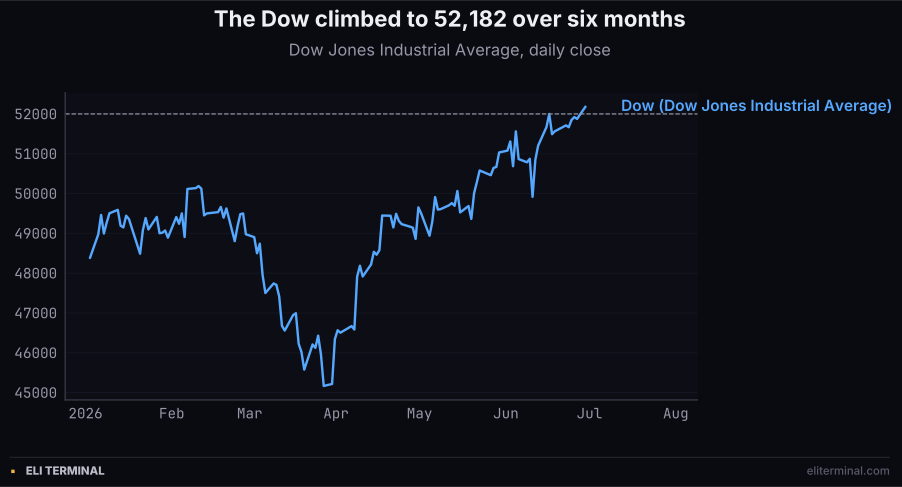
The Dow crossed 52,000 for the first time on the day Alphabet replaced Verizon as a member. A price-weighted index gained a mega-cap technology name and lost a low-priced telecom, tilting it toward the growth trade just as the growth trade ran.
Alphabet rose 4.82% to 353.65 in its first session as a Dow member, having replaced Verizon before the open after 22 years of the telecom in the index. S&P Dow Jones Indices announced the switch on June 23, and the price-weighted average now carries Alphabet alongside Nvidia, Amazon, Apple and Microsoft.
Tesla ran 8.46% to 411.84, its best single day in more than a year, most of it booked in the opening hour with a 3.71% gain in the 13:30 UTC hour. The move tracked Tesla's rollout of a lighter build of its full self-driving software to older Hardware 3 cars, plus sell-side delivery estimates for the quarter running above the company's own consensus.
Taiwan Semiconductor added 5.26% to 455.10 and Amazon 3.20% to 240.14, the risk-on bid spreading across mega-cap technology. No fresh chip headline drove Taiwan Semiconductor on the day; it rode the same tape, with the standing story of 3-nanometer price increases into the second half sitting in the background rather than breaking on Monday.
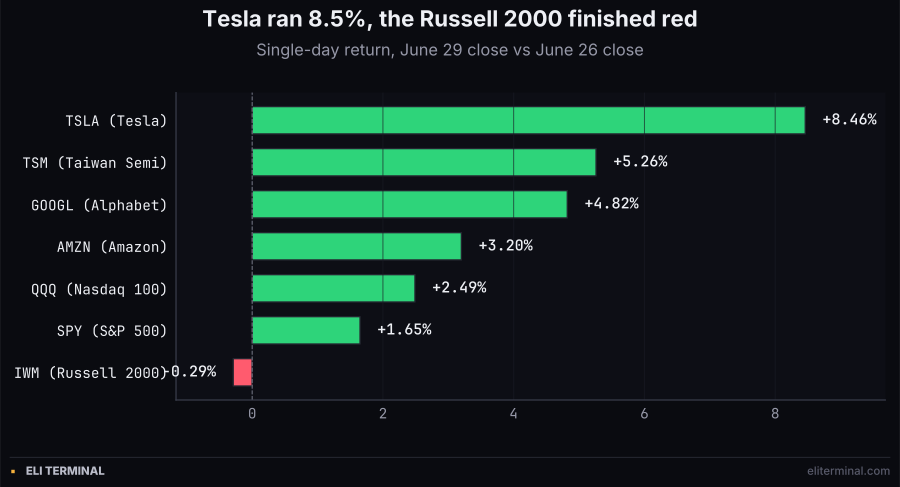
Tesla, Taiwan Semi and Alphabet took the bulk of the bid while the small-cap index alone closed lower. A risk-on day that one major average sits out is a narrow rally, not a broad one.
Brent rose 1.61% to 73.15 and WTI 2.20% to 70.75, a thin bounce after Brent fell 4.34% on Friday and WTI 3.74%. Crude sold hard last week on the de-escalation and recovered only a fraction of it on Monday, the physical-supply market pricing far less drama than the equity tape.
Gold fell 1.38% to 4,022 and silver 1.76%, the safety bid from the war scare unwinding as talks got announced. Defense names sold with them, Lockheed Martin down 1.05%, the mirror image of the risk-on move in equities.
High-yield credit barely registered any of it, with the main junk-bond ETF up 0.23% on the day the VIX fell more than 4%. Credit was never pricing the stress that the equity-volatility complex was, so it had nothing to reprice when the stress eased.
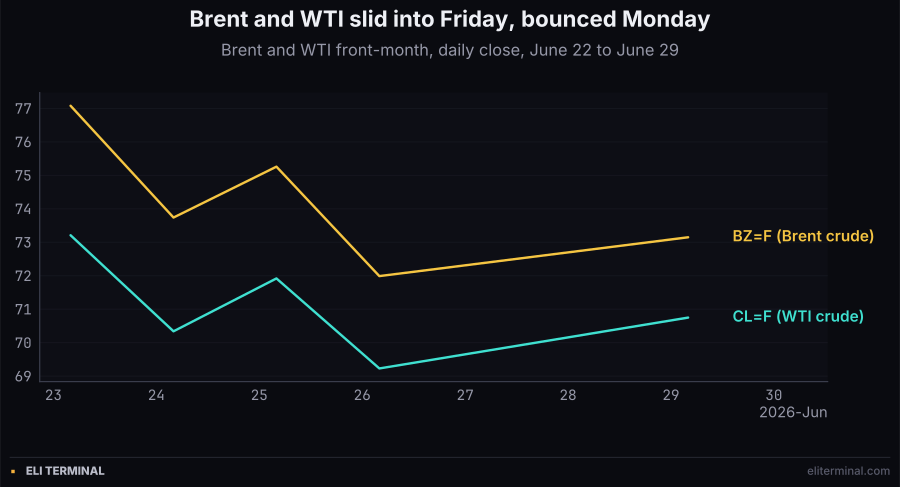
Brent gave back 4.3% on Friday and recovered 1.6% on Monday. The crude market treated the de-escalation as a supply event and the Monday talks headline as barely worth a bounce, a quieter read than the equity rally implied.
The two Iran markets closed roughly 21 points apart, and that gap is the first thing to track: whether the meeting odds hold their gains and the final-deal market stays pinned near 45% tells you if June 29 was a real de-escalation or a headline the market oversold. The Doha talks scheduled for Tuesday are the near test.
The Hormuz-fee market at 44.5% is the tell underneath the relief. If that number keeps climbing while equities price calm, the lever Iran holds over the strait is repricing even as the meeting gets celebrated, and oil is the asset that would feel it first.
The Dow above 52,000 rests on a narrow base. A risk-on day the Russell 2000 sat out, carried by Tesla and the mega-cap technology names, is a rally that needs breadth to confirm it, and the small-cap tape is where that confirmation shows up or fails to.