Friday June 26, 2026 • Who Pays, Who Profits
OpenAI Delays Its IPO, Chip-Builders Crater as Software and Lilly Soar
Western Digital fell 13% and Micron 6.7% after a report that OpenAI may delay its IPO to 2027, while the software that rents their compute soared, ServiceNow up 9.9%.
WDC 586.45 −13.2% ·
STX 899.90 −12.2% ·
MU 1132.33 −6.7% ·
NOW 98.34 +9.9% ·
SNOW 248.96 +9.7% ·
LLY 1208.12 +7.1% ·
MSFT 372.97 +5.7% ·
NVDA 192.53 −1.6% ·
NASDAQ 25297.62 −0.24% ·
S&P 7354.02 −0.05% ·
DOW 51876.11 −0.09% ·
10Y 4.37% ·
GOLD 4084 ·
WTI 69.87 ·
VIX 18.4
Sell The Builder, Buy The Renter
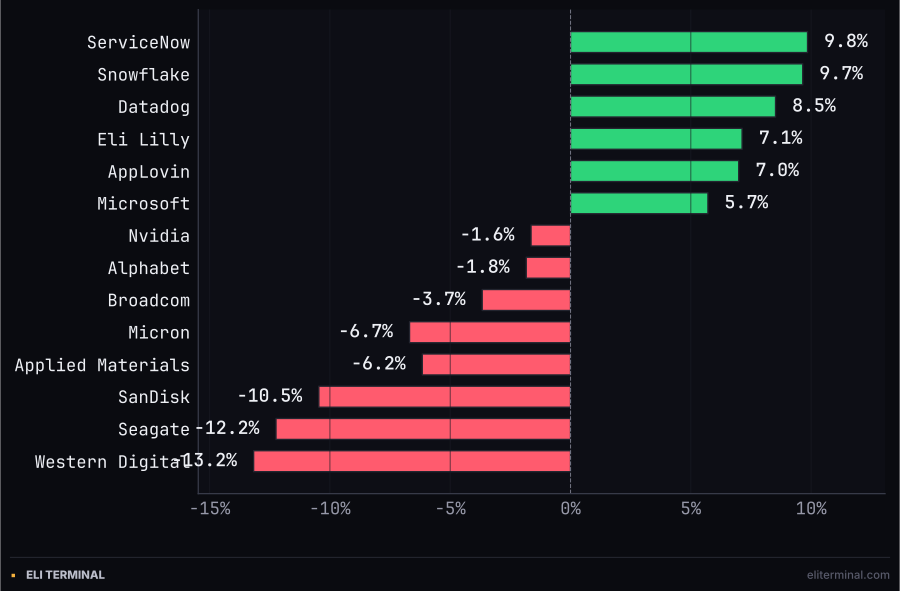
The chip makers whose revenue is the data-center invoice fell hard while the software that rents that compute rose just as hard, the two halves of the AI trade repricing in opposite directions on the same June 26 session.
One report changed the AI question
The New York Times reported after Thursday's close, between roughly 21:27 and 22:10 UTC, that OpenAI is leaning toward delaying its IPO to 2027, with Sam Altman calling any valuation below 1 trillion dollars a "non-starter." The story moved the AI question from who builds the data centers to who pays the compute bill and earns a return on it.
One number set the caution: SpaceX has slid to 153 dollars from a post-IPO peak near 202, and that fade is the template OpenAI is said to be watching before it lists. A marquee name trading below its debut is the warning that made a 2027 date the safer one.
The backers took the first hit overnight. SoftBank, holder of a roughly 65-billion-dollar OpenAI stake, fell 13% intraday in Tokyo, while lead underwriters Goldman Sachs dropped 4.27% and Morgan Stanley 4.08%, the IPO machinery repricing before the chips did.
The market sold the builders
Western Digital fell 13.2% to 586.45 and Seagate 12.2% to 899.90, the storage names leading the rout because spinning-disk and flash capacity is the most direct read on data-center build orders. When the build-out timeline gets longer, the invoice names sell first.
Micron gave back 6.7% to 1,132.33 and SanDisk 10.5% to 2,090.71, erasing most of Thursday's earnings pop of 15.7% and 22%. A record memory quarter was the asset on Thursday and the build-out proxy on Friday, and the second read won.
Texas Instruments fell 8.5%, Applied Materials 6.2% and Broadcom 3.7%, with the semis ETF down 4.0%. The equipment maker, the analog supplier and the custom-silicon vendor all sit on the same side of the line: their revenue is somebody else's capex.
The Rotation, Five Days
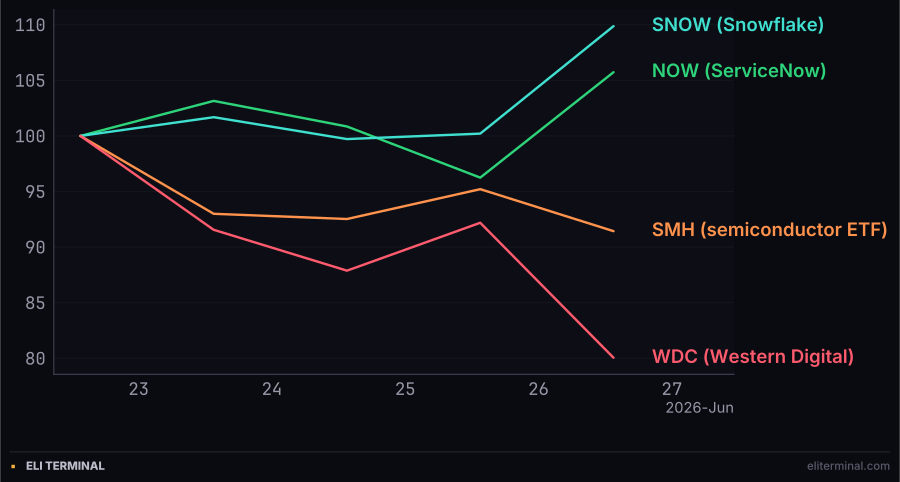
Over five days the builders and the renters traded places. The semis ETF and Micron rolled over on Friday while ServiceNow and Snowflake broke higher, the cross marking the moment the AI dollar moved from the invoice to the margin.
And bought what rents the compute
ServiceNow rose 9.9% to 98.34 and Snowflake 9.7% to 248.96, the day's two biggest gainers, because both sell software that runs on rented compute and books the margin without carrying the capex bill. The OpenAI delay made that asset-light model the place to be.
Datadog added 8.5% to 239.77 and AppLovin 7.0% to 477.08, the monitoring layer and the ad-targeting engine riding the same logic. None of them have to fund a fab or a data-center shell to grow, so a longer build-out timeline is their tailwind, not their tax.
The split was clean: the four software names averaged a gain near 9% while the seven chip and equipment names averaged a loss near 9%. One day separated the companies that pay for compute from the companies that resell it.
The index hid the rotation
The S&P 500 closed at 7,354.02, down 0.05%, the Nasdaq 0.24% to 25,297.62 and the Dow 0.09% to 51,876.11. The headline averages said the day was a non-event.
Microsoft did the masking, rising 5.7% to 372.97 on 181 million shares while Apple recovered 3.1% to 283.78 after Thursday's drop. Two megacaps green enough to offset a double-digit collapse in storage is why the index barely moved.
Nvidia and Alphabet name the limit. Nvidia closed 1.6% red at 192.53 and Alphabet 1.8% at 337.39, both sitting out the bounce, so this was not a blanket megacap rally. The VIX fell 2.5% to 18.41 and the Russell 2000 closed 0.3% green, the calm and the small-cap bid that mark a rotation rather than a selloff.
The bid was a growth scare, not an inflation one
Gold held above 4,000 and closed near 4,084, up 1.3%, with silver up 2.4%, on a day the 10-year yield fell to about 4.37% and the dollar slipped to 101.36. Gold and bonds bid together is the tell: when both rally, the fear is growth, not prices.
The Fed backdrop made that reading sharper. A hawkish Kevin Warsh has the market pricing roughly an 80% chance of a December hike, so duration buyers stepping in alongside gold were not betting on easier policy. They were buying protection against a slowing economy meeting a central bank that will not cut.
Eli Lilly led the defensive bid, rising 7.1% to a record 1,208.12 on European backing for its Jaypirca cancer drug and Medicare access for its GLP-1 franchise. A roughly 1.07-trillion-dollar healthcare name printing an all-time high while the chip complex craters is the rotation in one stock.
The intraday tape confirmed the violence under the flat close. The S&P air-pocketed to roughly 716.58 on the SPY, down about 2.6%, before clawing back to a flat finish, the kind of round trip that hides a real repricing inside a quiet headline number.
Gold Up, Yields Down
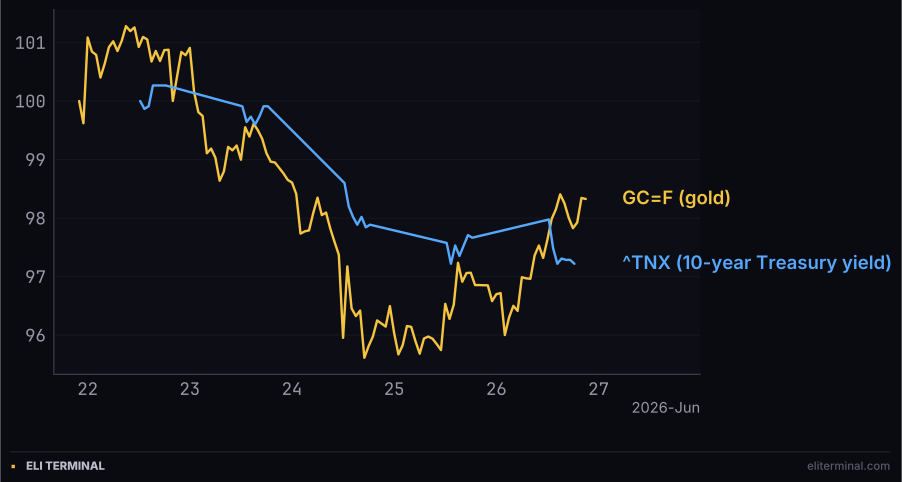
Gold and silver rose while the 10-year yield and the dollar fell on June 26. Both classic havens bid at once, into a Fed pricing a December hike, is a growth fear rather than an inflation hedge.
What to watch
The build-versus-rent split is the first thing to track: whether the chip and equipment names keep underperforming the software that rents their output tells you if Friday was a one-day reaction or the start of a regime where the AI dollar prefers margin to invoice.
The OpenAI timeline is the catalyst underneath it. If the company confirms a 2027 listing or names a valuation, the builders that depend on its capex get a cleaner read on how long the spending runs, and the software that rents the compute gets a longer runway.
The last test is the Fed against a slowing tape. A roughly 80% December-hike bet into a growth scare is a loaded setup, and whether gold holds above 4,000 and Lilly holds its record will say whether the market keeps treating defensives as the safe side of the AI trade.
The market sold who pays for the build-out and bought who profits without the bill on June 26. A report that OpenAI may delay its IPO to 2027 sent Western Digital 13% and Micron 6.7% lower while ServiceNow rose 9.9% and Snowflake 9.7%, with Eli Lilly to a record. Gold up and yields down marked a growth scare, and a flat S&P with a falling VIX hid the whole repricing.
END
eli terminal • Friday June 26, 2026