Micron's Year, Into The Print
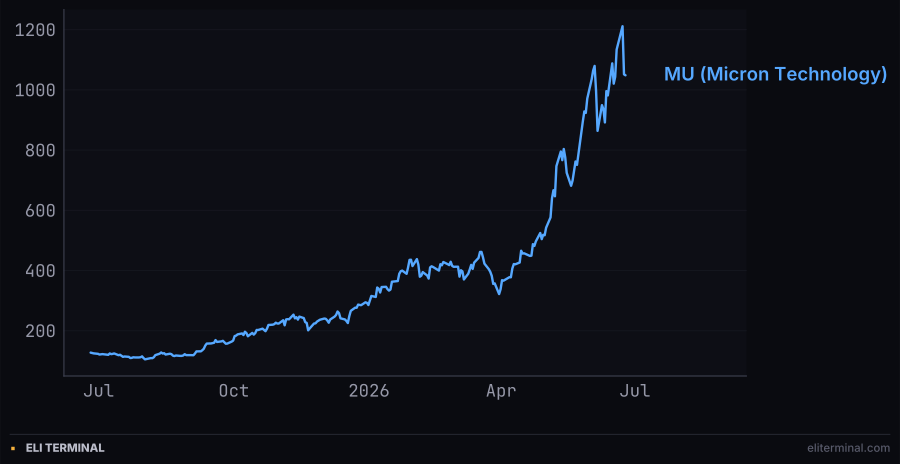
MU ran ~720% in a year to a 1,211 close on June 22, fell 13% on June 23, and closed 1,048 on June 24, hours before a record 41.5B quarter and a 50B guide landed after the bell.
Micron printed a record 41.46B quarter and jumped nearly 15% after hours, while Microsoft fell into a bear market and oil settled under 70 for the first time since March.
MU ran ~720% in a year to a 1,211 close on June 22, fell 13% on June 23, and closed 1,048 on June 24, hours before a record 41.5B quarter and a 50B guide landed after the bell.
SPY closed down 0.05% and QQQ 0.42%, yet equal-weight RSP gained 0.71%, small-cap IWM rose 0.46%, and the Dow added 0.37%. The cap-weight tape printed red while the median stock printed green.
The VIX closed at 18.63, down 2.6% on a down-index day, after an intraday spike toward 20 at the 19:00 UTC equity low faded into the bell. A selloff lifts volatility; this one let it sink, the signature of money moving across the market rather than out of it.
RSP beat SPY by 76 basis points, the spread that names the move as a rotation out of mega-cap technology. The drag sat almost entirely in a handful of AI heavyweights, and that is where the day was decided.
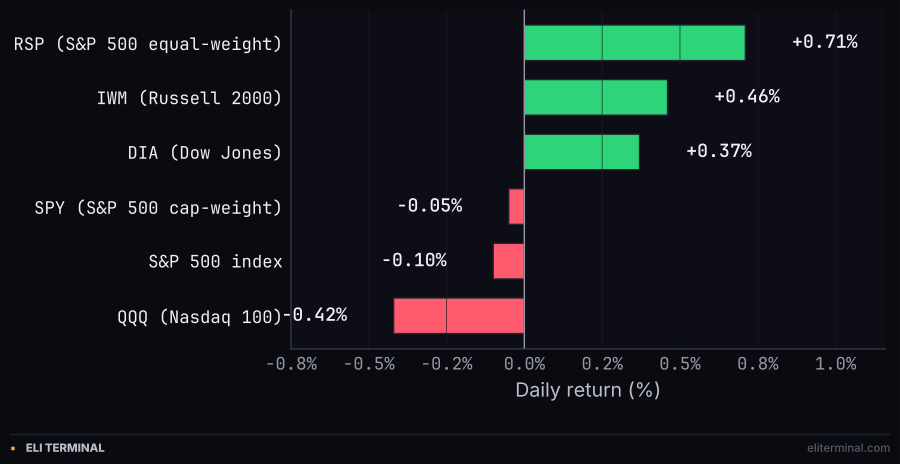
Equal-weight RSP and small-cap IWM led green while the cap-weight S&P 500 and QQQ closed red. The median stock rose as the index fell.
Microsoft fell 2.27% to 365.46 and entered a bear market, more than 20% off its peak and roughly 23% lower in 2026, the worst Mag7 name of the day. The slide was the sum of a collapsed Oracle cloud-capacity lease, Copilot class actions, about 1,000 Xbox layoffs and rising capex worry, none of it a single fresh headline.
Oracle dropped 4.62% to 157.53, the biggest mega-cap decliner, after its annual report on June 22 put the build-out in cash terms. Capex jumped to 55.7 billion from 21.2 billion, free cash flow ran negative 23.7 billion, the company cut 21,000 jobs, guided next-year capex toward 95 billion, and raised 20 billion in equity-linked financing that dilutes holders.
The semiconductor index had already fallen 7.9% on June 23 and carried that hit into Wednesday's open. Kevin Warsh's first FOMC on June 17 lifted the median 2026 rate projection to 3.8% from 3.4%, and a June 22 BofA note flipped to forecasting three hikes this year with no cuts until 2028, turning a higher discount rate into a multiple squeeze on the longest-duration names.
Micron itself sank 5.8% to a 991.10 intraday low before recovering to 1,048.51 by the bell, de-risking into its own after-close print. The tape had spent the session selling the suppliers down ahead of the report that would test whether the spend was a contract instead.
Micron's fiscal third-quarter revenue hit a record 41.46B, up 346% from a year ago and 16% above the roughly 35.7B consensus, the largest quarter in the company's history and the number that reframed the whole tape. Non-GAAP gross margin set a record at 84.9%, against 74.9% the prior quarter and 39% a year ago.
The Q4 guide is 50.0B in revenue, give or take 1B, roughly 16% above the 43B analysts modeled, with EPS of 31.00 and gross margin near 86%. The company is guiding the coming quarter to grow faster than the record it just printed.
Sixteen multi-year take-or-pay agreements are the structural lock, 14 of them carrying about 100B in cumulative minimum revenue commitments plus roughly 22B in upfront cash deposits. Its HBM3E and HBM4 memory is booked solid through calendar 2027 with demand reaching into 2028, and the data-center business grew 653% from a year ago to 11.5B.
Micron jumped about 14.8% to 1,203.89 after hours, after closing the regular session at 1,048.51 (the overnight level as of publication, and after-hours prices round-trip). The regular day had treated the AI spend as a cost; the print said the demand behind it is already booked.
Western Digital and SanDisk rose more than 10% after hours while Nvidia, the GPU buyer, barely moved on the same news. The supplier layer ripped while the stock everyone calls the AI trade stayed flat.
Over the past 30 days Marvell is up 32.9% and Micron 17.0%, against Nvidia 7.4%, Broadcom 9.5% and Super Micro 12.5% lower, the same drift across the month. The AI capex dollar is leaving the accelerator and landing in the memory and interconnect that gets locked by contract.
Microsoft fell 2.27% into a bear market and Oracle 4.62%, the cap-weight index treating the build-out as a cost. Micron, after the bell, showed the build-out is sold out through 2027.
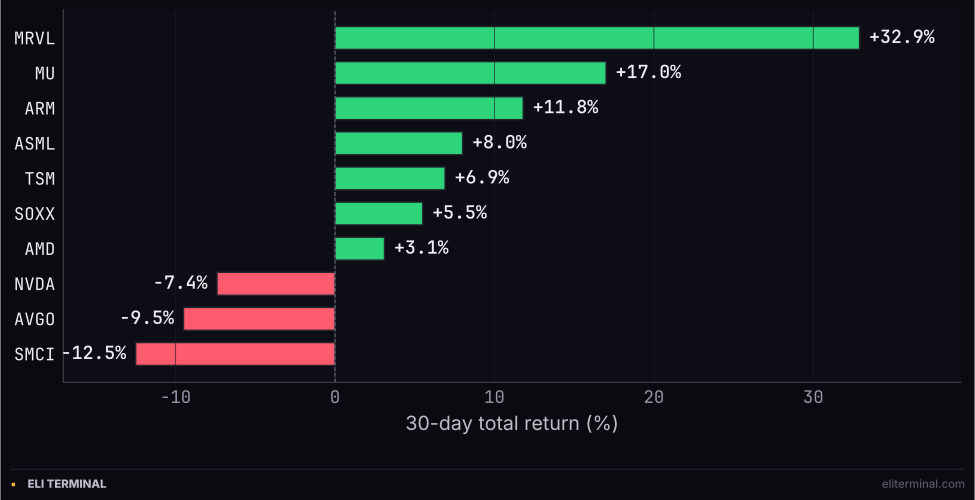
Marvell up 32.9% and Micron 17.0% led the 30-day chip tape while Nvidia, Broadcom and Super Micro lagged 7 to 13% lower. The value migrated to the memory and interconnect suppliers.
The 10-year Treasury yield fell 9bp to 4.40% and the long-bond ETF rose 1.37%, the kind of move that usually signals a dovish repricing of the Fed.
Credit refused to confirm it: high-yield closed 0.04% lower, leveraged loans 0.07%, AAA structured credit flat, and the dollar firmed to 101.61, a 3-day high, even as yields dropped. The bid was a flight to duration, not a risk-on credit rally, and the buyer was oil.
WTI settled near 70, an electronic close of 69.87 after a 69.63 low at 14:00 UTC, the first sub-70 print since March 2, as Strait of Hormuz tanker traffic resumed under a US-Iran 60-day framework that has the IMO evacuating more than 11,000 seafarers. Brent fell 10.4% over five days while the energy producers held flat, the equities pricing the crude crash as a transitory war-premium unwind rather than a demand break.
Bitcoin fell 2.6% to 61,030, gold 3.0% to 365.92, and silver hit an 8% intraday low, all three bottoming on the same 17:00 UTC candle and trading as risk assets rather than havens. The Iran de-escalation drained every geopolitical hedge at once, with roughly 706 million in crypto liquidations, 84% of them long positions, and BlackRock's digital-assets head saying AI is "sucking all the oxygen out of the room," pulling institutional money from bitcoin into the same build-out the equity tape fought over all day.
At 8:30 ET Thursday the calendar delivers May PCE, final first-quarter GDP, and weekly jobless claims at once, with core PCE estimated near 3.4% year over year, the test of whether the hawkish three-hike call survives contact with the data. Micron's after-hours jump, provisional near 21:00 UTC, sets up a semiconductor gap-up that runs straight into that inflation print, the supplier trade against the rate trade in a single open.