The Bill-Payers Sold, The Suppliers Rose
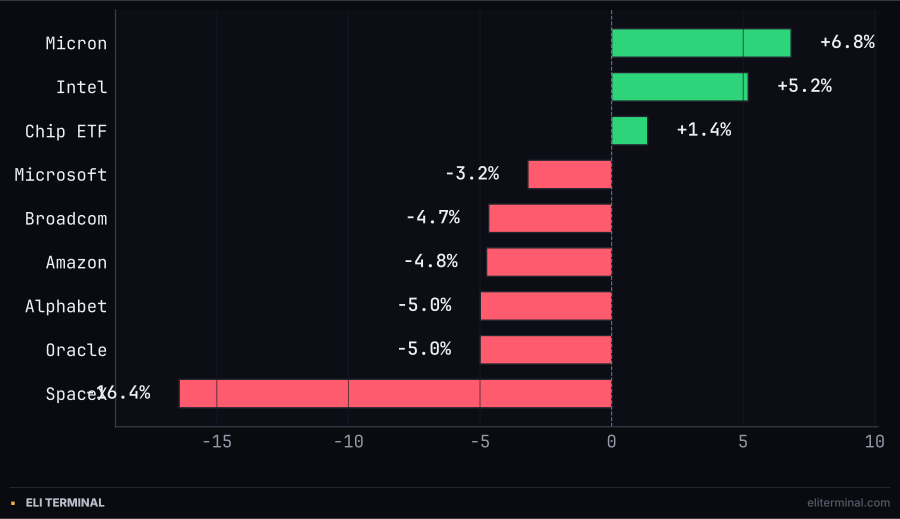
The memory chips rose to records while every capital-intensive AI name fell, the split at its most violent.
Two of Google's frontier-AI stars defected to rivals over the weekend, Alphabet fell 5%, and the doubt spread to every AI spender, Amazon, Oracle, Broadcom, Microsoft. The chipmakers that collect the bill rose to records, Micron over 1,200. The market is selling the companies paying for AI and buying the ones supplying it.
The memory chips rose to records while every capital-intensive AI name fell, the split at its most violent.
For weeks the market has nursed a quiet doubt about the hundreds of billions the hyperscalers are spending on AI. On Monday it got a face. Alphabet fell 5%, down as much as 7% intraday, its worst day since February, erasing roughly 250 billion in value.
The trigger was talent. Over the long weekend, DeepMind's John Jumper, a 2024 Nobel laureate and the co-creator of AlphaFold, said he is leaving for Anthropic, days after Gemini co-lead Noam Shazeer departed for OpenAI. DA Davidson's Gil Luria put it bluntly, the exits raise the fear that "Google is losing the war for talent at the frontier of AI."
If Google's own people are leaving, the market reasoned, the payoff on everyone's spending is less certain, and it sold the spenders together. Oracle fell 5%, Amazon 4.75%, Broadcom 4.67%, Microsoft 3.18%.
The numbers behind the nerves are real. The hyperscalers are on track to spend more than 450 billion on infrastructure this year, and the free cash flow is bending under it, Alphabet's down sharply year over year, Amazon's trailing measure barely positive. The question the market asked today is the one it has avoided all cycle: what comes back.
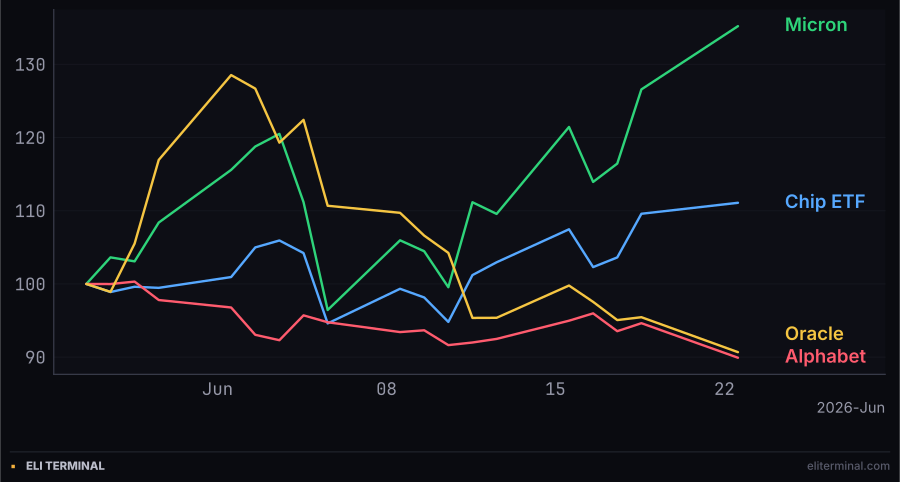
Over a month the suppliers, Micron and the chip group, pulled away from the spenders, Alphabet and Oracle, the gap widening by the day.
The same session that gutted the spenders sent the suppliers to records. Micron rose 6.8% to a record 1,211, its first close above 1,200, Intel 5.2%, and the chip fund 1.4% to an all-time high. The money leaving the bill-payers went straight to the bill-collectors.
The chips have a shortage the spenders do not have a payoff. Memory prices have run up roughly 170% on the year, the fastest in a decade, with DRAM and high-bandwidth memory essentially sold out for 2026 on three-to-five-year contracts. UBS sits at a 1,625 target into Micron's earnings on Wednesday, the kind of number that only attaches to scarcity.
The macro pressed on the same seam. Since Warsh's hawkish meeting last week, the odds of a 2026 rate hike have nearly doubled, to 62% from 36% on decision day, the 10-year yield rose to 4.51%, and the dollar held an 11-week high.
Higher-for-longer is a tax on time. It punishes the companies whose payoff sits years out, the AI spenders and the long-duration froth, and it rewards the companies booking cash now, the memory makers selling a sold-out product at rising prices. The Fed did not start the split, but it is widening it.
SpaceX crashed 16.4% to 154.60, a three-day slump of about 23% that has erased over 600 billion from its mid-June peak. The trigger was a funding tell: ten days after its record IPO, the company confirmed it will sell at least 20 billion in bonds, mostly to repay a loan and fund a buildout it puts near a trillion dollars by 2031.
Borrowing 20 billion within days of raising 86 billion read as a need, not a choice, and a coming wave of insider lockups added to the supply. It is the spender thesis in its purest form: a company that has to keep raising money to fund a far-off promise is exactly what this market no longer pays for.