Two Engines, Opposite Signs
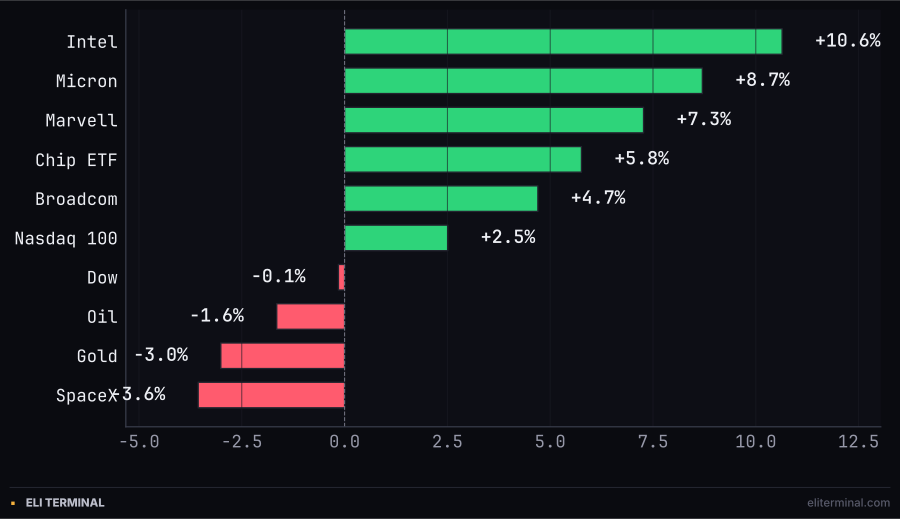
The chips ripped to records while everything the Fed touches, the dollar aside, fell, gold, oil and the long-duration froth.
A day after Warsh's hawkish Fed, the dollar hit an 11-week high and gold fell 3%, the rate channel working as advertised. But the chips ripped to records on their own catalysts: Intel up 10.6% on a Trump-Apple chip deal, Micron to a record 1,134 on the memory shortage. The Fed sets the price of money, not the price of chips.
The chips ripped to records while everything the Fed touches, the dollar aside, fell, gold, oil and the long-duration froth.
The semiconductors led a broad rebound the day after the hawkish meeting. Intel jumped 10.6% to 133.99, Micron 8.7% to a record 1,134, Marvell 7.3%, the chip fund 5.8% to its own record, and the Nasdaq 100 rose 2.5%.
None of that was a bet that the Fed had softened. The catalysts were supply-side and idiosyncratic, a presidential post about Intel and a memory milestone out of Korea, the kind of news that re-rates chips regardless of the funds rate.
Intel's 10.6% came from Truth Social. President Trump posted before the open that Apple had agreed to design and build chips with Intel on US soil, and that he had also steered Nvidia and Elon Musk's TeraFab toward Intel's foundry. Neither Apple nor Intel confirmed it, so the move was sentiment on a headline.
It landed on a primed name. BofA's Vivek Arya had double-upgraded Intel to Buy on June 11 with a 135 target, modeling foundry revenue from 1.1 billion this year to 47 billion by 2030. Intel's intraday high of 135.48 tagged that number almost exactly, the market pricing Arya's foundry thesis the instant Trump appeared to validate it.
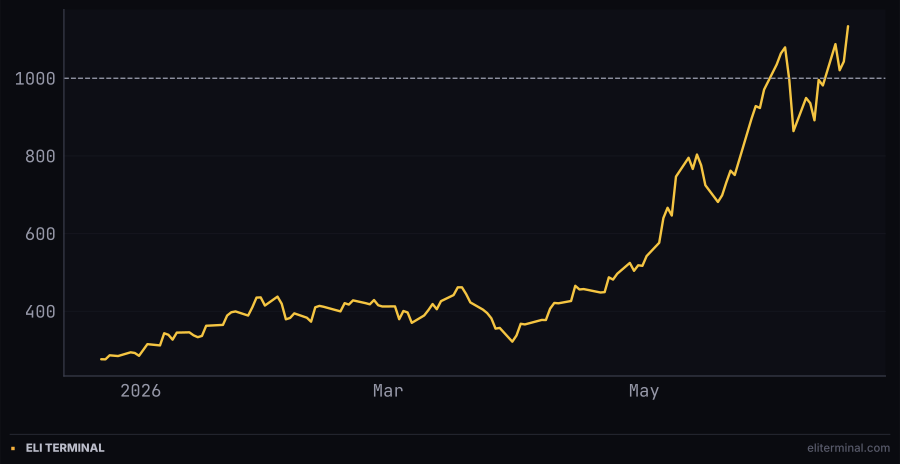
Micron closed at a record 1,134, up roughly fourfold in six months, ahead of its June 24 earnings.
Micron rose 8.7% to a record 1,134 after SK Hynix shipped 12-layer HBM4E memory samples ahead of schedule, a milestone that lifted the whole memory complex and sent Korea's index past 9,000 for the first time. The read-through to Micron was direct.
The level reflects a genuine scarcity. Micron's 2026 high-bandwidth memory is sold out, filling only 50 to 65% of demand, and UBS sits at a 1,625 target on memory prices it sees rising 50% a year. This is the supplier side of the AI trade that has now rallied through a jobs shock, an Oracle capex scare and a hawkish Fed inside two weeks.
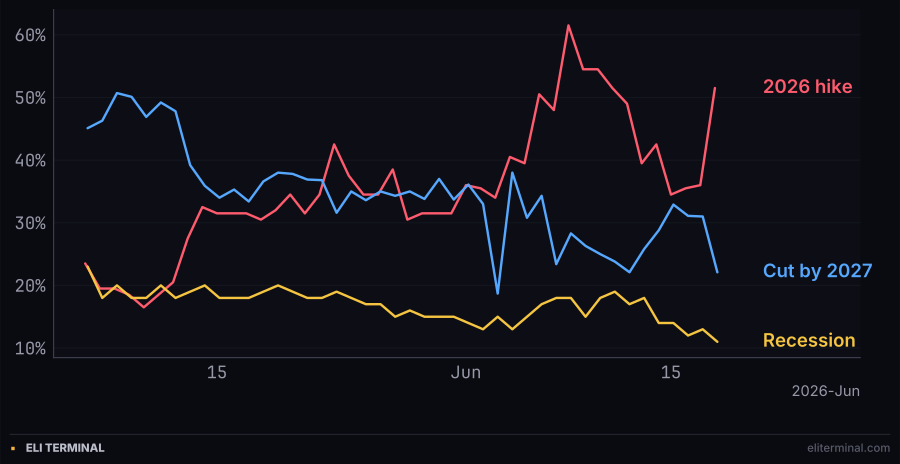
A day after the hawkish dots, the 2026-hike bet jumped to 52%, cut odds collapsed to 22%, and recession bets fell to 11%.
Everywhere except the chips, the hawkish Fed was loud and clear. The probability of a 2026 rate hike jumped to 52% from 36% the day before, the highest in six weeks, while the odds of a cut by 2027 collapsed to 22% and recession bets fell to 11%.
The dollar agreed, grinding to an 11-week high at 100.82, and the 2-year yield held the 16-basis-point spike it took on decision day, the biggest Fed-day jump since 2008. The curve bear-flattened, the front end up on hike risk and the long end down, the shape a Fed gets when the market believes it will lean on growth to hold the line.
Gold fell 3% to 4,228, down 123 dollars in two sessions, its entire bull case, falling real rates and a weak dollar, turned upside down, with the Iran deal pulling the geopolitical bid out at the same time. SpaceX fell another 3.6% to 185 and the speculative long-duration names kept rolling over.
That is the rate channel doing its job. Higher-for-longer drains the assets whose value sits furthest in the future, gold, unprofitable growth, a fresh IPO, while it cannot touch a company that is sold out of a product the world cannot get enough of.
Accenture, the AI-services bellwether, fell after reporting. Revenue grew 6% and management called demand for AI reinvention strong, but new bookings of 19.3 billion came in below last year's 19.7 billion and the guidance disappointed.
It is a small dissonance worth marking. The companies selling the picks and shovels of AI are sold out, while the consultant being paid to implement it just missed on bookings, the first hint that demand for the buildout and demand for its output may not be the same line.