The Baton Passed From Chips To Value
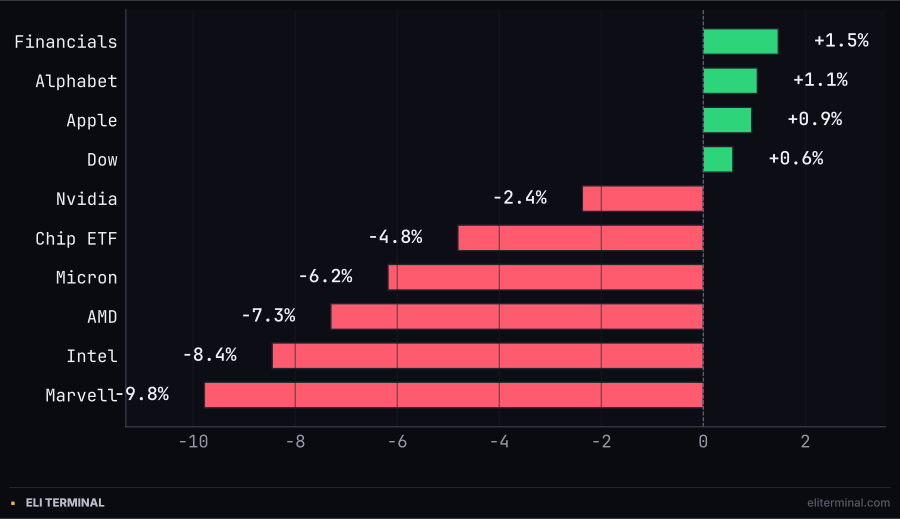
The most-stretched chips gave back Monday's melt-up while financials, megacaps and the Dow rose. A rotation, not a sell-off.
A day after Micron topped 1,000, the overbought chips reversed hard, Marvell down 9.8%, while the Dow hit a record and value took the baton. Oil crashed again to 76 on the Iran deal, and the market braced for Warsh's first dot plot, which the Street expects to turn hawkish despite cheaper oil.
The most-stretched chips gave back Monday's melt-up while financials, megacaps and the Dow rose. A rotation, not a sell-off.
The chips that ripped Monday gave it straight back. Marvell fell 9.8% to 278.67, erasing its 10.4% gain, with Intel 8.5%, AMD 7.3%, Micron 6.2% back to 1,020, and the chip group 4.8%. Wells Fargo's Ohsung Kwon put it plainly, the sector was "way overbought."
There was no fresh bad news, just exhaustion. After a melt-up that took Micron through 1,000 in a day, the highest-beta names were the obvious place to take profits a session before the Fed, which is why the damage concentrated in Marvell, Intel and AMD rather than spreading.
The rest of the market did the opposite. The Dow rose 0.6% to a record near 52,000, the S&P slipped only 0.6%, and financials led at 1.5%, with Alphabet, Apple and Meta all green against the falling chips.
This is rotation, not fear. The VIX held at 16.4 and gold was flat, the signatures of money moving from one part of the market to another rather than leaving it. Cheaper oil lowers the inflation premium, and that lifts exactly the rate-sensitive value names that absorbed the flow out of semis.
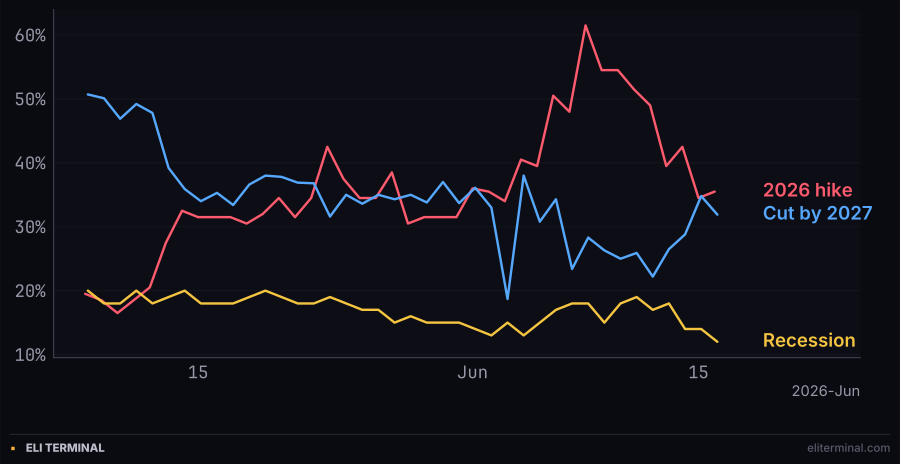
The hike premium built on the hot jobs and CPI prints, peaked near 62% on June 8, then faded to 35% as oil crashed. The cut and recession bets stayed low.
The prediction markets tell the real macro story, and it is not the one cheaper oil implies. The probability of a 2026 rate hike climbed from 30% in mid-May to a 62% peak on June 8, after the hot jobs and 4.2% inflation prints, and only faded to 35% as oil collapsed this week.
The cut side never engaged. Odds of a cut by 2027 sat near 32% and recession odds drifted down to 12%. The market read the oil crash as relief, not slowdown, which gives the Fed room to stay patient rather than reason to ease.
A hold at 3.50 to 3.75% is priced near certain, so the June 17 decision is really the Summary of Economic Projections. The Street, BofA and EY-Parthenon among them, expects the new dots to erase March's lone 2026 cut, with several participants penciling in a hike.
Warsh inherits the tension. He is seen as personally dovish, may even withhold his own dot as too new, yet he chairs a committee that has turned hawkish on a 4.2% headline that energy drove. Cheaper oil is a forecast; the inflation already printed is a fact, and the dots speak to both.
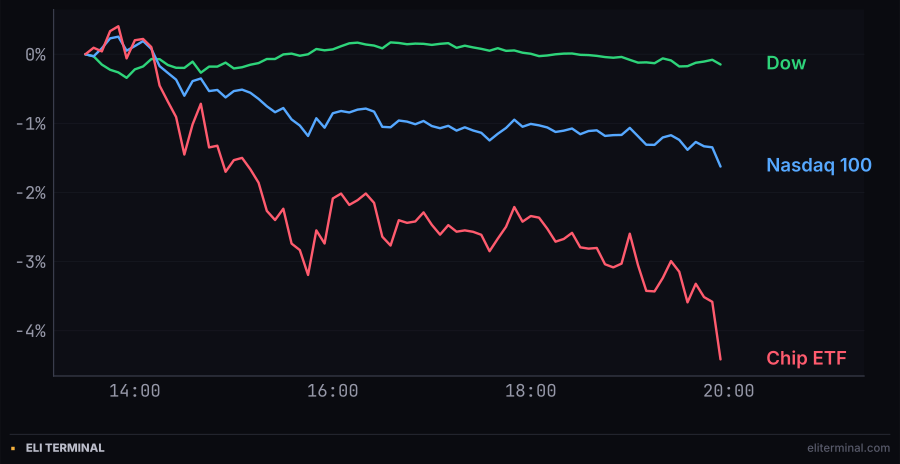
The Dow held green all day while the Nasdaq and the chips bled, the split widening into the close.
The day's data cut against the hawkish dots. Housing starts collapsed 15.4% to a 1.177 million pace, far below the 1.43 million expected, and permits slipped too. The interest-rate-sensitive corner of the economy is clearly feeling the higher-for-longer stance.
That is the squeeze the new chair walks into: inflation data too hot to ease against, activity data soft enough that hiking would bite. Oil crashing to 76 on the Iran deal, down 5.8% on the day with an interim agreement set to be signed this week, is the one clean disinflationary force pulling him toward patience.