The Largest IPO In History
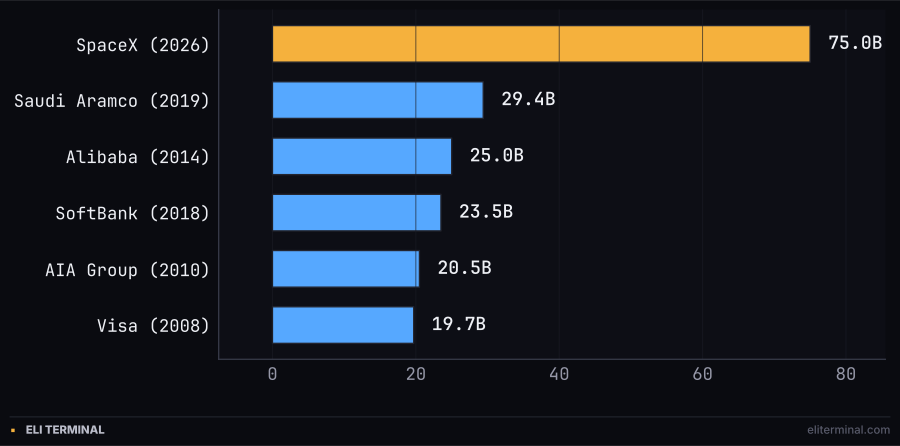
SpaceX raised 75 billion, more than double the previous record, Saudi Aramco's 29.4 billion in 2019.
SpaceX went public in the largest IPO ever, raised 75 billion, and closed up 19% at a valuation above 2 trillion, the same week the market crushed Oracle for spending too much. The market is not afraid of capex. It is discriminating between scarcity and leverage.
SpaceX raised 75 billion, more than double the previous record, Saudi Aramco's 29.4 billion in 2019.
SpaceX priced its IPO at 135, opened at 150, and closed its first day at 160.95, up 19%, with Elon Musk ringing the Nasdaq bell remotely from Texas. The offering raised 75 billion, the largest in stock-market history by a wide margin.
The valuation is the headline. At the close the company was worth more than 2 trillion, vaulting SpaceX into the handful of the world's most valuable listed companies on its first afternoon as one.
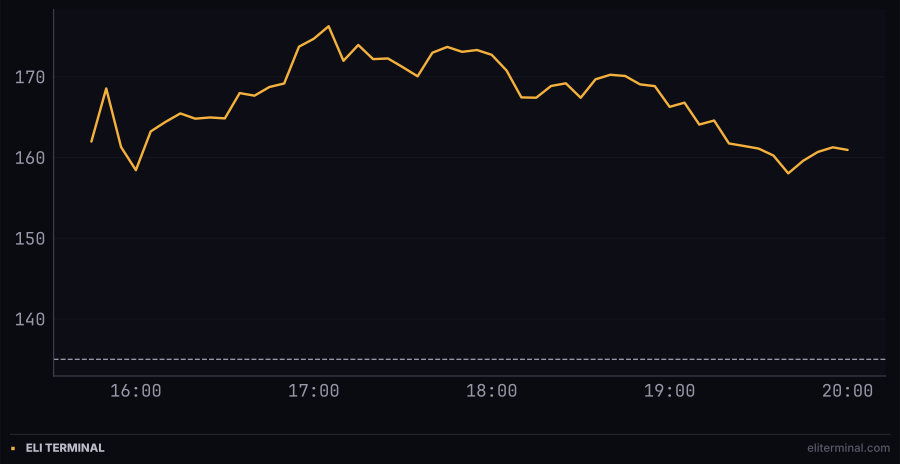
The stock traded between roughly 158 and 176 all session, never near the 135 IPO price. The dashed line is where it priced.
This was not a pop that faded. SpaceX traded between roughly 158 and 176 for the entire session and never came close to the 135 it priced at. The book was reported at more than three times oversubscribed, with institutional demand above 250 billion.
For a market that spent the week refusing to pay for capital intensity, that is a striking amount of money, chasing the most capital-intensive company there is.
Two days ago the market sold Oracle 8.5% for telling it that building AI capacity would cost up to 95 billion next year. Today it poured 75 billion into a company that spends even more freely, on rockets and satellites, and has for two decades.
The difference is not the spending; it is what the spending buys. SpaceX is a scarce, founder-led near-monopoly in launch and satellite internet that investors have waited years to own. Oracle is a mature vendor borrowing to chase a buildout its rivals are chasing too. The market paid for the franchise and punished the leverage.
The franchise is real. SpaceX runs the dominant share of global launch through Falcon and Starship, and Starlink has turned satellite internet into a subscription business with millions of users and the cash flow to match.
That is the scarcity premium in one company: a moat measured in landing pads and orbital slots, not in a backlog that has to be financed. The 2 trillion is the price of owning something that cannot be cloned with a debt raise.
A 75 billion deal clearing at a 19% premium, into a market with the second-lowest consumer sentiment on record, says the machine for taking large private companies public is wide open again. Tesla rose 1.8% on the halo, and every late-stage unicorn now has a proof of concept for its own exit.
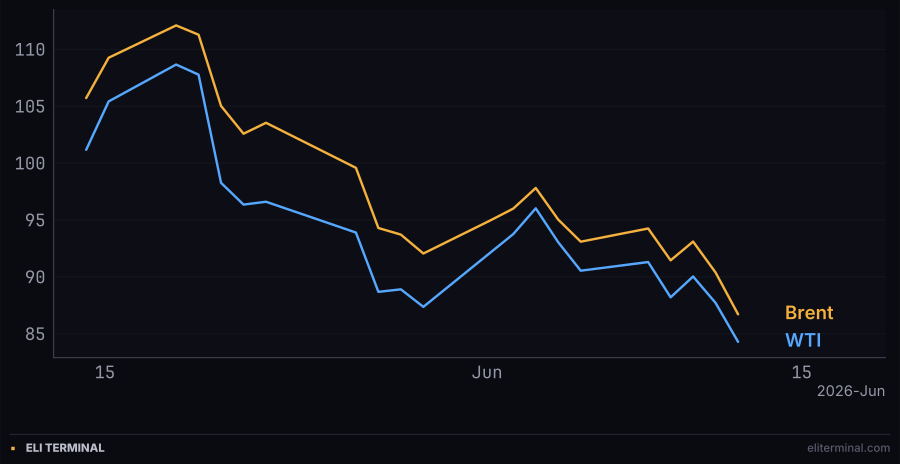
Crude has rolled off its war-premium highs, with WTI down to 84 as Washington and Tehran signal a deal is close.
Crude dropped again, WTI 3.9% to 84.29 and Brent 4.1%, after President Trump and Iran signaled a deal was close, the reversal that sent the Dow up 900 points the day before. The war premium that drove inflation all spring is draining out of the price.
That matters beyond energy. Gasoline did most of the work in the hot CPI and PPI prints this week, so oil rolling from 112 in May toward 84 now is the single cleanest path to a cooler headline, and the first relief consumers have felt, with sentiment ticking up to 48.9 from a record low.
The broad market drifted higher, the S&P up 0.5% and small caps 0.9%, with financials leading and the VIX down a third straight day to 17.7. The chip re-sort cooled rather than reversed, Oracle steadied near flat, Micron and Marvell took a breather after their double-digit run, and the laggards Intel and AMD did the catching up.