Sell The Spender, Buy The Suppliers
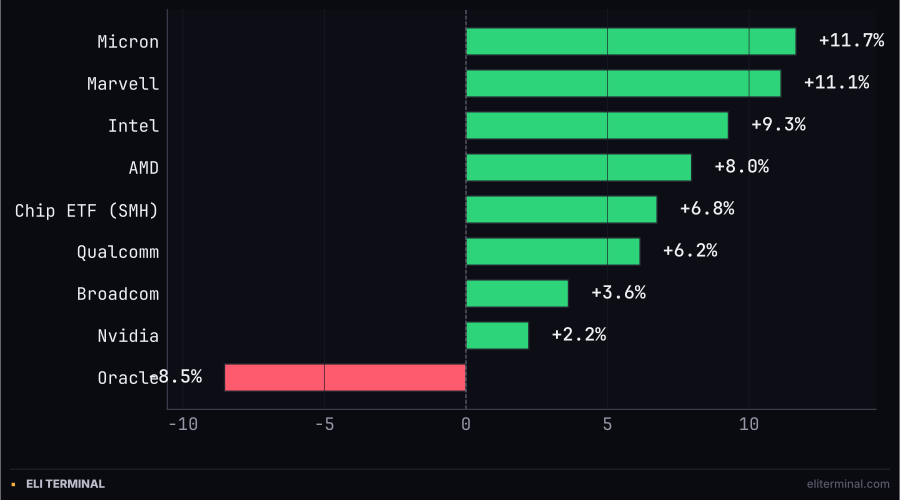
Every major chipmaker rose, several by double digits. Oracle, the one name that funds the buildout with debt, was the lone decliner.
Oracle crashed 8.5% on a capex plan that climbs to 95 billion and a 24 billion cash burn, while the chipmakers its spending pays ripped: Micron 11.7% to within reach of 1000, Marvell 11.1%, the chip group 6.8%. The bill that sinks the spender is the backlog that lifts the suppliers.
Every major chipmaker rose, several by double digits. Oracle, the one name that funds the buildout with debt, was the lone decliner.
Oracle fell 8.5% to 184, down as much as 12% during the session, its worst day in more than a year, while almost every name that makes the chips it buys rose by double digits. Micron jumped 11.7% to 996, Marvell 11.1%, Intel 9.3%, AMD 8.0%.
That is not one trade selling off and another rallying by coincidence. It is the same trade pulled apart along a single seam: who pays for the buildout, and who gets paid.
The number that crashed Oracle is the number that lifted the chips. Oracle told the market it will spend up to 95 billion on infrastructure next year, and that spending is revenue for the companies that sell the memory, the accelerators and the networking silicon inside it.
So the market did the obvious thing. It sold the company writing the checks and bought the companies cashing them, on the same afternoon, off the same news.
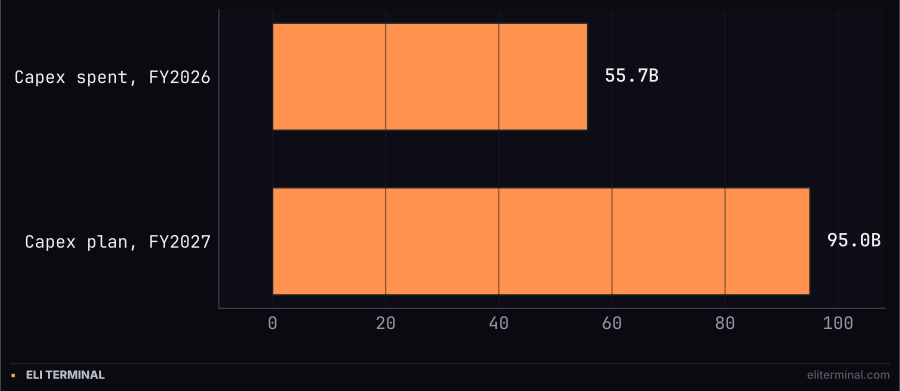
The forward number, not the quarter just reported, is what did the damage. Capex guidance jumped from 55.7 billion to as much as 95 billion.
The quarter itself was a record. Revenue rose 21%, cloud infrastructure 93%, and the backlog swelled 363% to 638 billion, larger than Google's or Microsoft's. None of that was the problem.
The problem was the plan to pay for it. Capex guidance for next year climbed to as much as 95 billion, from 55.7 billion this year, free cash flow ran to a deficit of 23.7 billion against almost nothing the year before, and Oracle said it will raise 40 billion in debt and equity to fund it.
Larry Ellison and Safra Catz framed the 95 billion as the only rational answer to a hockey-stick surge in cloud demand that the 638 billion backlog makes real. The bull case is that the orders are already signed.
The bear case is whether Oracle can fund them. Melius Research said it is hard to know whether the company can hold to a capex plan this large, that rivals will not slow their own spending, and the debt-financed build has drawn scrutiny from analysts and litigators alike.
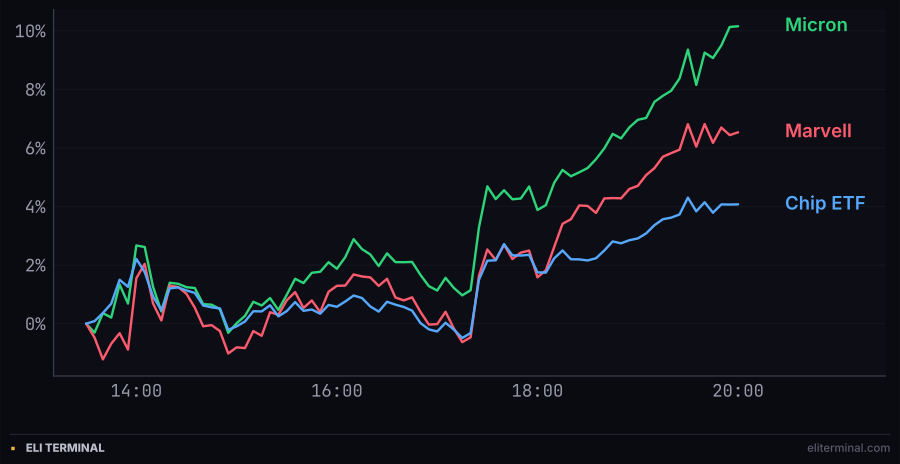
The chip names built gains all session and accelerated into the close, Micron up roughly 10% from the open.
Micron's 11.7% run toward 1000 is the cleanest expression of the other side. AI training is starved for high-bandwidth memory, DRAM and NAND are tight, and Micron, SK Hynix and Samsung are raising prices into the shortage.
That is why Micron and Marvell are up 74% and 93% this year. They are not financing the buildout, they are rationing what it needs, and pricing power is the reward.
The macro helped the rip. The 10-year yield eased to 4.46%, down about 8 basis points, the VIX collapsed 12% to 19.4, and the duration-sensitive growth names that had been punished by higher-for-longer got a day of relief.
A hot wholesale print could not get in the way. Producer prices rose 6.5% on the year, the fastest since 2022, but core was a softer 0.4% on the month, so the heat was energy again, and the market read past it exactly as it did with consumer prices.
Crude dropped 4%, WTI to 86.42, on a day President Trump vowed to resume strikes on Iran and threatened to seize the Kharg Island oil hub. A threat to the largest Iranian export terminal sent oil lower, not higher.
That is the third time in a week the tape has refused to trade an Iran headline as a supply shock. The war premium is already in the price, and the market has stopped paying up for each new escalation.