The Air-Pocket And The Recovery
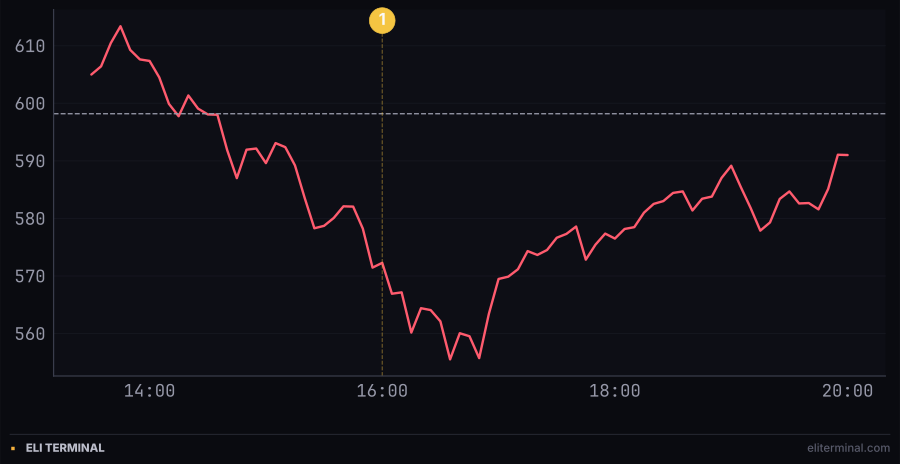
The chip ETF fell as much as 8% from its open after Trump vowed to respond to Iran, then climbed nearly all the way back by the close. The marker is the headline.
A Trump vow to respond to a downed US helicopter air-pocketed the chips 8.6% intraday and put Nvidia under 200, then the market bought it back. The close stayed braced for tomorrow's inflation print, not for war: financials and bonds up, high-beta and Apple down, the 9-day VIX back above the 3-month. Oil fell, not rose.
The chip ETF fell as much as 8% from its open after Trump vowed to respond to Iran, then climbed nearly all the way back by the close. The marker is the headline.
The chip group fell as much as 8.6% intraday and Nvidia traded below 200 for the first time in weeks after President Trump posted that Iran had shot down a US Apache patrolling the Strait of Hormuz and vowed to respond. Marvell was down 14.7% from its open at the low.
Then the buyers came back. The chip ETF closed down just 1.2%, Nvidia finished roughly flat, and the S&P 500 ended off only 0.3% at 737.05, a long way above the lows the helicopter headline made.
The recovery off the bottom is the first tell that the market did not price a war. A genuine Hormuz escalation re-rates the whole tape and holds; this one was bought within the hour.
The second tell is what stayed green. Financials rose 0.9%, regional banks 1.3%, healthcare 1.3%, and long bonds 0.6%, with the 10-year slipping to 4.53%. A market bracing for a Middle East shock does not spend the afternoon buying banks.
Even without Iran, Monday's chip bounce was built to fade. It ran on Marvell's index inclusion, a pair of Micron upgrades and a volatility unwind, not on any change in the macro, and Marvell gave back 7.6% of that 9.6% on Tuesday.
The reason to trim was sitting on the calendar. May CPI lands Wednesday at 8:30 ET, the Fed is still priced 98% to hold next week and 55% to hike at some point in 2026, and a 2026 cut is down to a 20% chance. With nothing fundamental improved and a binary print one morning away, cutting the most-stretched names was the rational trade.
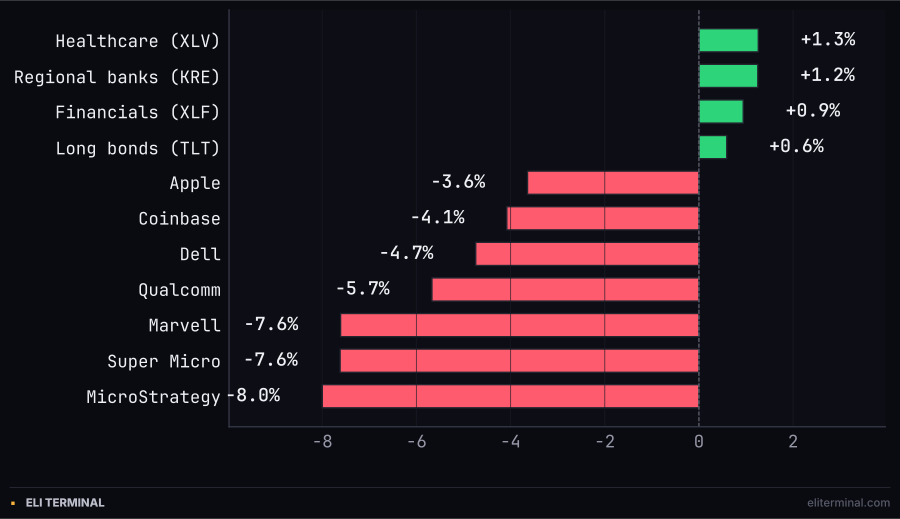
The day before an inflation print, the money left the highest-beta names and bought banks, healthcare and bonds. A rotation, not a collapse.
Regional banks led the green at 1.3%, ahead of broad financials, the purest expression of a steeper curve and a hands-off Warsh Fed on bank rules. Healthcare matched it at 1.3%, helped by a $10.6 billion GSK bid for cancer-drug maker Nuvalent, which jumped 39%.
The bond bid and the bank bid moving together is the signature of a positioning day, not a fundamental one. Long bonds rose as a hedge into CPI while regional banks rose on the steepener, the two sides of the same pre-print trade.
This was not blind beta-dumping. Qualcomm fell 5.7% on a sell-the-news unwind of its ByteDance custom-chip deal, with export-control doubts and Nvidia's new RTX Spark part bearing on the same market, and Marvell carried the same custom-silicon shadow on top of its index-bounce giveback.
MicroStrategy fell 8.0% and Coinbase 4.1% as Bitcoin sat near a two-week low, down about 13% from its peak after roughly $4.4 billion of exchange-traded-fund outflows. Dell lost 4.7% on disclosed Silver Lake stock sales and profit-taking after its blowout AI-server quarter. The de-risk found the names with the most to give back.
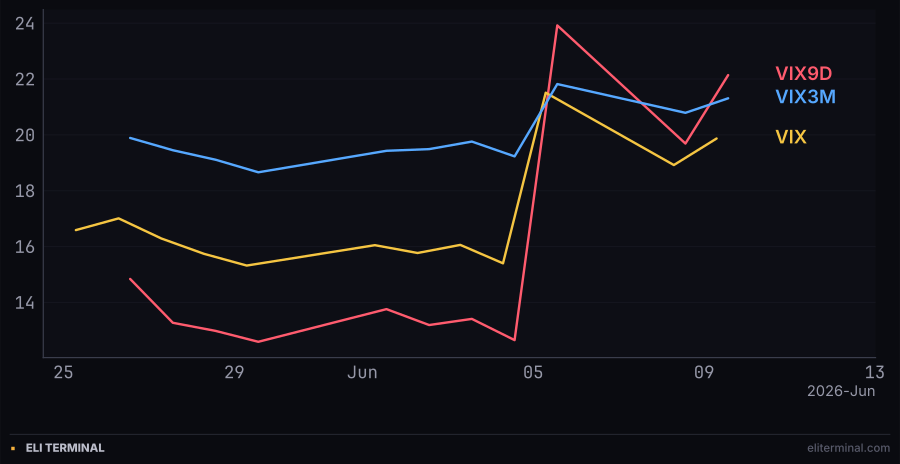
One session after collapsing, the 9-day VIX climbed back above the 3-month, the curve front-loading all of its premium onto Wednesday's CPI.
The 9-day VIX rose 12.4% to 22.14 and pushed back above the 3-month, the options curve paying more for the next nine days than the next three months. That is the market overpaying for protection because the next data point matters.
The mechanism makes it dangerous both ways. Dealers flipped to short gamma on Monday for the first time in eight weeks, SpotGamma's hedging gauge hit its largest reading on record, and the desk warned of a red-alert setup for a volatility spasm. In that posture, dealers sell weakness and buy strength, so whichever way CPI breaks, the move gets amplified. The options market is implying a swing of about 1.6% on the S&P from the print alone.
Apple fell another 3.6%, taking its two-day loss since the keynote to about 5.5%. The analysts split on the day, and the bears set the tone: Rosenblatt's Barton Crockett, at Neutral with a 276 target, called the event more a defensive step than an offensive one, and KeyBanc's Brandon Nispel said the updates were lacking against a high bar.
The substance is the problem a high multiple cannot carry. Apple's rebuilt Siri leans on Google's Gemini and has no consumer launch date, and Needham's Laura Martin drew the line between showing AI value and capturing it. Wedbush's Dan Ives kept his 400 target and called it a step in the right direction, but for two days the sellers have won.
Consensus has May CPI at 4.2% on the year, the hottest since 2023, with gasoline up about 9% on the month doing most of the headline work, and core near 2.9%. The market puts the odds of a print above 4.2% at roughly 41% and above 4.3% at only 11%, so the bar that resets the hike debate is close.
The cleanest read on the Iran scare is the crude tape: oil fell 2.85% to 88.70 rather than spiking. Hormuz already carries a war premium, Iran signaled a conditional pause, and surging US crude exports are filling the gap, so the helicopter dented equity nerve without touching the supply picture. Oracle reports after Wednesday's close into the same nerves, its $553 billion backlog set against $134.6 billion of debt and a $50 billion capital plan.