The Month In Five Lines
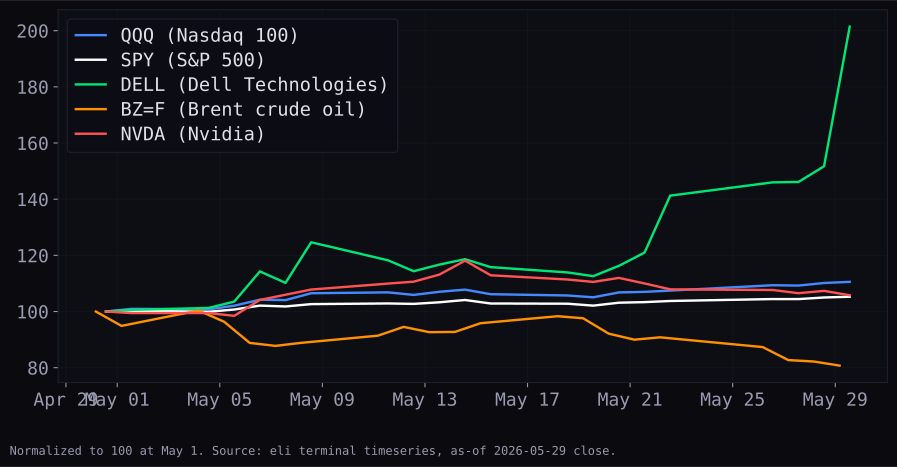
Rebased to 100 on May 1. Dell's last-day jump sits above a tech tape that already climbed all month; Brent fell the whole way.
Dell jumped 33% on a record AI-server quarter while Nvidia slipped 1.5%; a day after April PCE printed 3.8%, the S&P 500 still closed at a record 7,580.
Rebased to 100 on May 1. Dell's last-day jump sits above a tech tape that already climbed all month; Brent fell the whole way.
Dell closed at 420.91 on Friday, up 32.8% from Thursday's 317.05, the largest one-day move since the company returned to public markets in December 2018. The stock gapped to 415.97 at the open and added a few more dollars through the session rather than fading.
The 8-K hit at 20:15 ET Thursday and reported first-quarter revenue of 43.8 billion, up 88% year over year, with GAAP diluted EPS of 5.24 (up 282%) and non-GAAP EPS of 4.86 (up 214%). AI-Optimized Servers revenue was 16.1 billion, up 757% year over year, against 8.5 billion in traditional servers and networking.
Management said it booked 24.4 billion in AI orders during the quarter and raised the full-year fiscal 2027 revenue outlook to about 167 billion at the midpoint, up nearly 50% year over year, with the AI server line guided to 60 billion. Those are the numbers the open traded on.
HPE rose 12.6% to 43.04 and Super Micro rose 11.6% to 46.09, the two listed names whose revenue most resembles Dell's AI-server mix. Arista added 2.7% to 159.47 on the networking read-through.
Nvidia fell 1.5% to 211.14, AMD eased 0.4% to 516.10 and Taiwan Semiconductor dropped 1.5% to 418.45. The hourly tape shows Nvidia opening at 215.92 and drifting to 211.15 by the close, so the day's AI enthusiasm did not extend to the chips that sit inside the servers Dell sells.
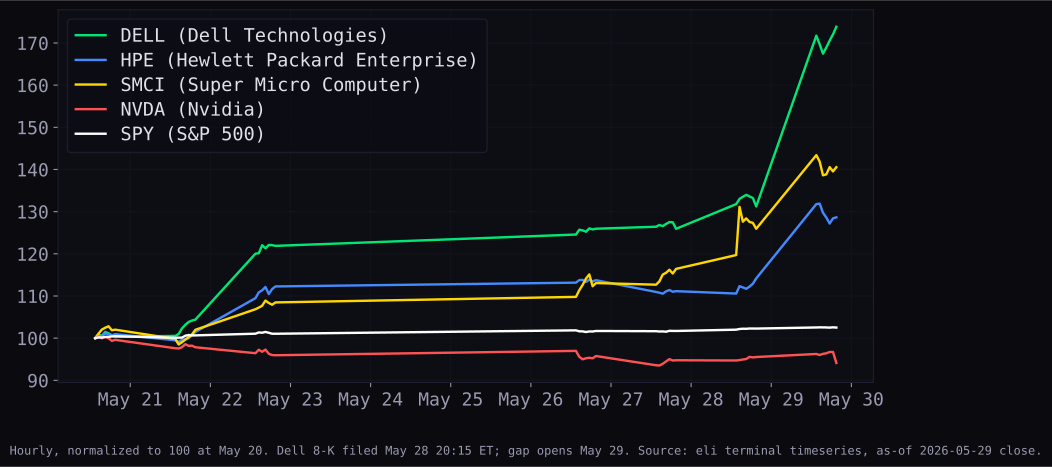
Hourly, rebased to 100 on May 20. The May 29 gap is confined to Dell, HPE and Super Micro; Nvidia and the S&P 500 hold their lines.
Micron rose 5.1% to 971.00 and Broadcom rose 4.7% to 446.77, both at or near 52-week highs, separate from the server-box trade. Broadcom heads into its own fiscal second-quarter report on June 3 with prior guidance near 22 billion for the quarter.
SanDisk added 3.3% to 1,694.98 and Western Digital was flat at 531.21. The technology sector ETF rose 2.2% on the day, the widest sector gain, while energy fell 1.2% and health care fell 0.9%.
The April PCE price index, released Thursday, rose 0.4% on the month for a 3.8% annual rate, the highest since May 2023 and a third straight year above the Fed's 2% target. CNBC and CNN tied the climb to tariffs and the spring Iran conflict.
Core PCE rose 0.2% on the month and 3.3% on the year, against estimates of 0.3% and 3.3%. The soft monthly core was the number the tape read, and Friday extended the move: the S&P 500 closed at a record 7,580.06, up 0.22%, its seventh straight up day and ninth straight up week, the longest such run since 2023.
The 10-year yield held at 4.45% and the 30-year at 4.99%, both close to Thursday, so the hot headline did not push the long end. The dollar index eased to 98.91 and the VIX fell to 15.32.
The Fed-June-no-change market sat at 98%, where it has held all month, and the June 25-basis-point cut market stayed near 3% in a deep contract. The 2026-recession market fell to 14.5% on Friday from 27% at the end of April, so the inflation print did not lift recession pricing.
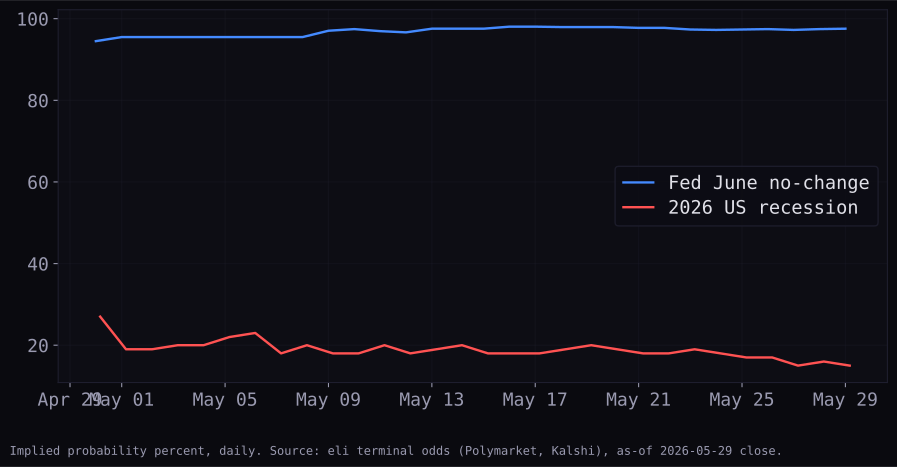
Implied probability. The June meeting is priced as a hold; recession odds drifted down through the month, including through Thursday's PCE print.
Brent fell 1.8% to 92.05 and WTI fell 1.7% to 87.36, with Brent down about 18% on the month as the United States and Iran moved toward extending a ceasefire. Yahoo Finance reported markets weighing whether Strait of Hormuz flows resume.
Gold rose 1.4% to 4,560 even as the dollar slipped and stocks rallied. For the month, the Nasdaq gained more than 8%, the S&P 500 about 5% and the Dow about 3%, with technology the leading sector since the late-March lows.