A Bond-Led Month, Not An Earnings One
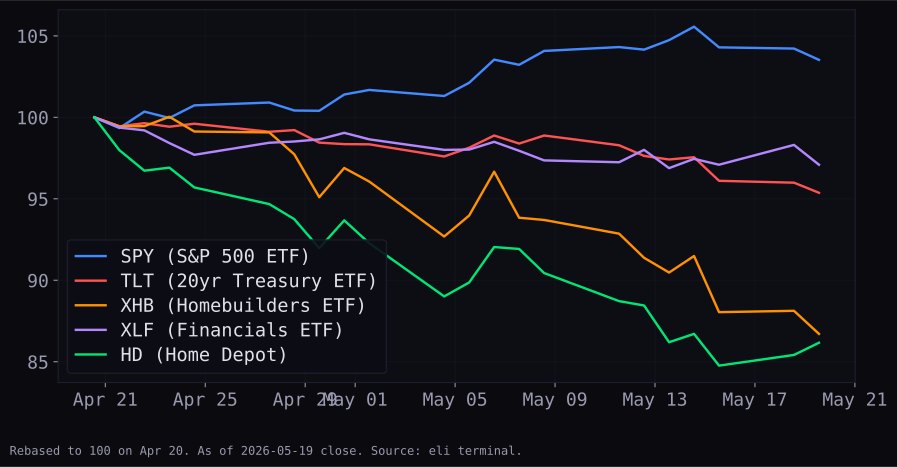
TLT, homebuilders, and financials all sit below their April 20 base; Home Depot held up better through its print.
The 30-year Treasury touched 5.198%, its highest since July 2007, the S&P 500 fell 0.67% for a third straight loss, and Home Depot beat yet rose only 0.9%.
TLT, homebuilders, and financials all sit below their April 20 base; Home Depot held up better through its print.
The 30-year Treasury yield reached 5.198% intraday, its highest level since July 2007, and settled near 5.181%. The 10-year rose 4 basis points to 4.667% and the 2-year added 3 basis points to 4.12%, a move concentrated at the far end of the curve.
The S&P 500 closed down 0.67% at 7,353.61, its third straight losing session. The Dow shed 322 points (0.65%) to 49,363.88 and the Nasdaq Composite fell 0.84% to 25,870.71, with the equity move tracking the yield jump through the afternoon.
Homebuilders fell hardest, with XHB down 1.61% and ITB down 1.46%, as the 30-year mortgage benchmark climbed with the long bond. Financials (XLF) lost 1.24% and small caps (IWM) dropped 1.08%, both groups that carry the most direct rate exposure.
Energy and defensives held green against the tape. XLE rose 1.17% and healthcare (XLV) added 1.10%, while crude eased, with WTI at 107.77 and Brent at 111.28, both still near four-year highs tied to the Iran conflict.
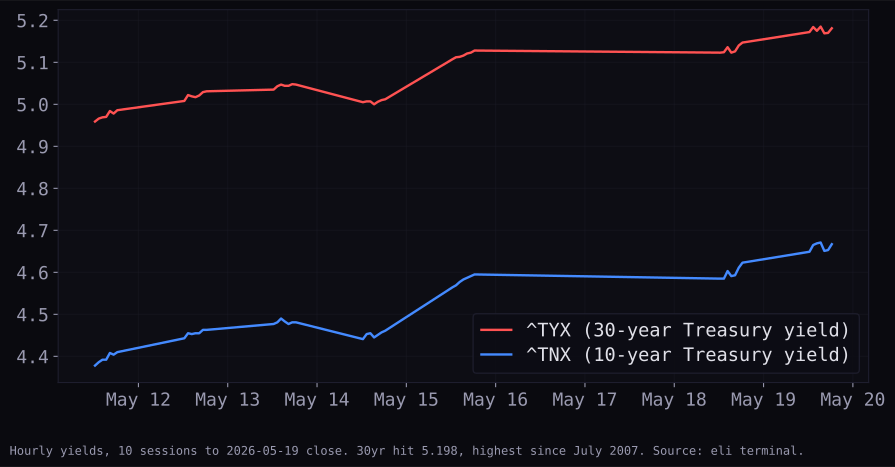
The 30-year climbed steadily into May 19, touching 5.197% during the session; the 10-year tracked it at a flatter slope.
Home Depot posted net sales of $41.8 billion, up 4.8% from a year earlier, with adjusted diluted earnings of $3.43 against a $3.41 consensus. Comparable sales rose 0.6% for the company and 0.4% in the United States, short of the roughly 0.9% analysts expected.
The company reaffirmed its fiscal 2026 outlook, guiding to total sales growth of about 2.5% to 4.5%, comparable sales of flat to up 2.0%, and adjusted earnings growth of flat to 4.0% from $14.69 in fiscal 2025. Reported diluted EPS of $3.30 was down 4.3% year on year.
The stock opened near 291 and climbed through the session to close at 302.44, up 0.88%, one of few large names higher on a down day. Home Depot remains down roughly 21% over the prior twelve months and lower year to date.
38% was the market-implied probability of a Fed cut by year-end 2026 on May 19, down from about 66% on April 20. The chance of a cut at the June meeting fell to 3% from roughly 9% over the same stretch, a steady bleed rather than a single repricing.
Inflation data drove the shift. The April PCE reading confirmed 3.8% year-on-year, a three-year high, and last week's reports pointed to reaccelerating price pressure as Iran-linked oil costs fed through, leaving the long end to absorb the deficit-and-inflation premium.
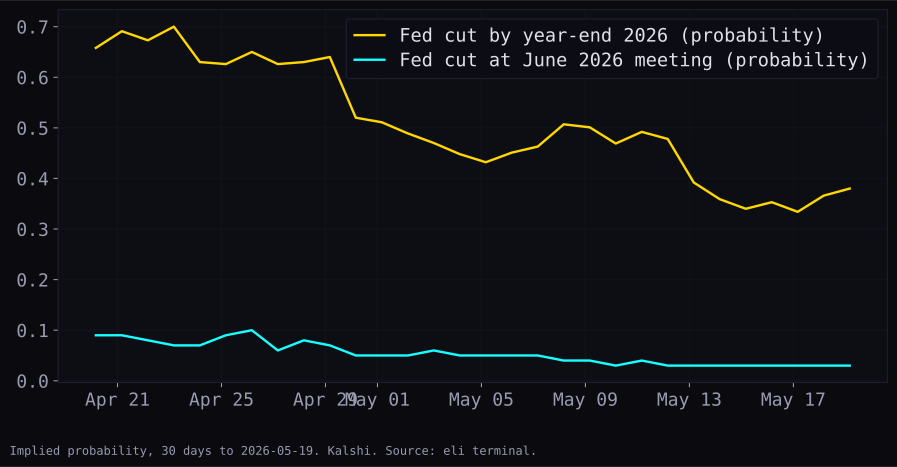
Year-end cut odds fell from about 66% to 38% over the month; June-meeting odds drifted toward 3%.
Silver fell 2.91% to 74.83 and copper dropped 1.71%, the day's sharpest commodity moves, while gold slipped 1.01% to 4,506. The dollar index firmed 0.33% to 99.30, a combination consistent with higher real yields pulling capital toward cash and Treasuries.
Credit stayed orderly through the equity decline. High-yield (HYG) eased only 0.24% and investment-grade (LQD) fell 0.50%, far less than the equity and homebuilder moves, leaving the stress concentrated in the rates and rate-sensitive equity groups rather than in spreads.